Unshaven hair transplant — what it actually means.
An unshaven hair transplant preserves the visible hairstyle and avoids full head shaving. For selected patients, this is entirely possible — but the term is often used loosely. This page explains what it means in practice, where the limits are, and how to know if it is suitable for you.
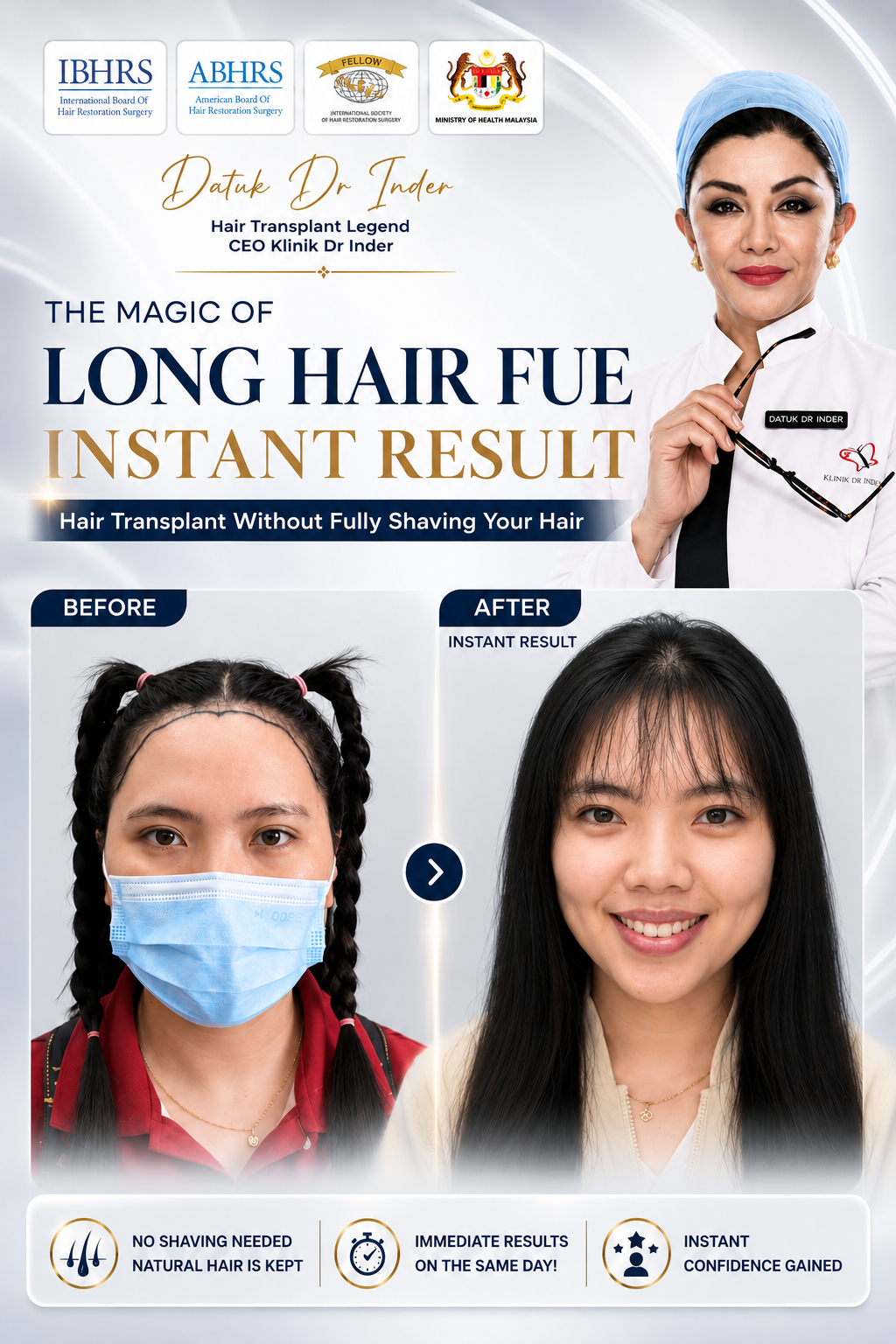
What “unshaven” actually means.
Unshaven is a useful description, not a guarantee. In most clinics — and at iGraft — it refers to a procedure planned around preserving the patient's visible hairstyle. Whether the entire donor remains fully untouched depends on graft requirement, donor density, and clinical planning.
- 01
The visible hairstyle is preserved
Day-to-day appearance — the way hair sits when styled — is maintained throughout the procedure and recovery.
- 02
Full head shaving is avoided
Patients do not leave the clinic with a shaved scalp or a visibly cleared donor band.
- 03
Some trimming may still be required
Depending on graft numbers, small areas may be selectively trimmed within the donor zone — concealed by surrounding hair.
- 04
It is a planning decision, not a slogan
Whether a case can be done fully unshaven is determined in person, not promised in advance.
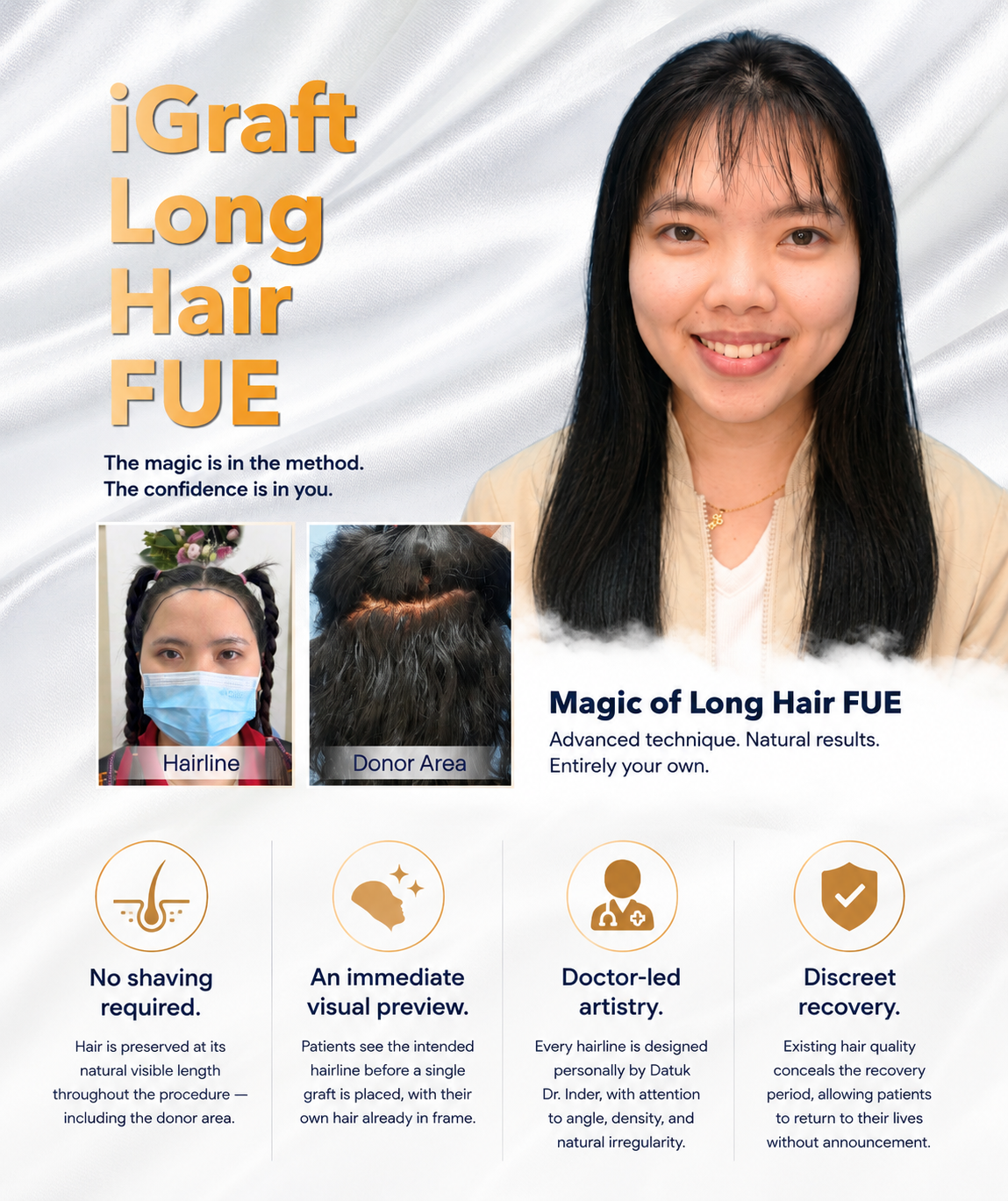
Can it really be done without shaving?
- 01For selected patients, yes
Patients with sufficient donor density, suitable hair length, and a moderate graft requirement can typically undergo a fully unshaven procedure.
- 02Larger graft numbers change the equation
Very high graft counts may require limited trimming in concealed areas to extract responsibly without thinning the donor.
- 03Hair character matters
Caliber, curl, and density across the donor are read carefully — they influence what is realistic without trimming.
- 04It is more demanding than standard FUE
Working between full-length hairs requires longer planning, slower extraction, and direct surgical involvement throughout.
- 05Honest assessment over promises
Candidacy is established in person. Patients are told clearly whether their case is fully unshaven, partly unshaven, or better served by another approach.
Where the practical limits are.
An unshaven approach asks more of the procedure — and of the patient. The trade-offs are technical rather than cosmetic, and they are worth understanding before a decision is made.
- 01
Longer planning
Donor mapping, density reading, and recipient design take more time when the field is not cleared.
- 02
More careful extraction
Each graft is isolated within preserved hair. The pace is slower than conventional shaved FUE.
- 03
More difficult graft handling
Long-shaft grafts require additional care during isolation, holding, and placement to protect the follicle.
- 04
Visibility is managed throughout
Extraction is distributed so the donor never appears visibly thinned — during the procedure or after.
- 05
Realistic graft limits per session
Session sizes are planned around what can be performed safely without compromising donor concealment.
- 06
Donor concealment, not invisibility
The working area is concealed by surrounding hair — not erased. Sensible aftercare still applies.
Unshaven does not mean no recovery.
Avoiding shaving improves discretion considerably, but the underlying biology of healing, shedding, and growth is unchanged. Expectations should be set accordingly.
- 01
First days
Mild redness and small crusts at recipient sites are normal. Existing hair conceals most of the area.
- 02
Weeks 1–2
Crusts settle. Aftercare instructions matter — washing, sleeping position, and sun exposure are guided carefully.
- 03
Months 1–3
Transplanted shafts shed as a normal part of the cycle. This phase is expected, not a setback.
- 04
Months 6–12
New growth establishes and integrates within surrounding hair. The result settles into its final character.
Who is most suitable.
An unshaven approach is best matched to patients whose donor characteristics, graft requirement, and lifestyle align. Final candidacy is always confirmed in person.
- 01
Patients with sufficient donor coverage
Adequate donor density is the primary clinical requirement for selective extraction without visible thinning.
- 02
Patients who require discretion
Those whose work or personal circumstances make a shaved scalp impractical or undesirable.
- 03
Women with long hair
For whom shaving is rarely an option, and for whom selective extraction within preserved length is essential.
- 04
Executives & public-facing professionals
Patients whose calendar does not accommodate visible recovery and whose presence is part of their work.
- 05
Selected hairline and crown cases
Targeted restorations where graft numbers fall within the range an unshaven approach can responsibly support.
- 06
Patients seeking a doctor-led process
The method depends on direct involvement by Datuk Dr. Inder — not high-volume, technician-led extraction.
Practical questions.
Continue exploring.
- 01What is Long Hair FUEThe technical definition, mechanics, and clinical detail of the method.
- 02No-Shave Hair TransplantHow the no-shave approach is shaped around discretion and public life.
- 03The iGraft TechniqueThe protocol Datuk Dr. Inder developed across three decades of practice.
- 04Long Hair FUE for MenConsiderations for male patterns — hairline, crown, and density.
- 05Long Hair FUE for WomenRestoration designed for women, performed entirely within long hair.
- 06Private ConsultationHow an in-person assessment with Datuk Dr. Inder is arranged.
An honest answer, in person.
Find out whether an unshaven approach is suitable for your donor area, hair goals, and lifestyle — assessed directly by Datuk Dr. Inder.
ABHRS Diplomate · ISHRS Fellow · 30+ Years Experience