FUE Hair Transplant Malaysia — precision hair restoration.
A technical reference for patients considering FUE in Malaysia — written around extraction precision, donor management, and the Long Hair FUE refinement that allows the procedure to be undertaken without shaving, by the surgeon personally.
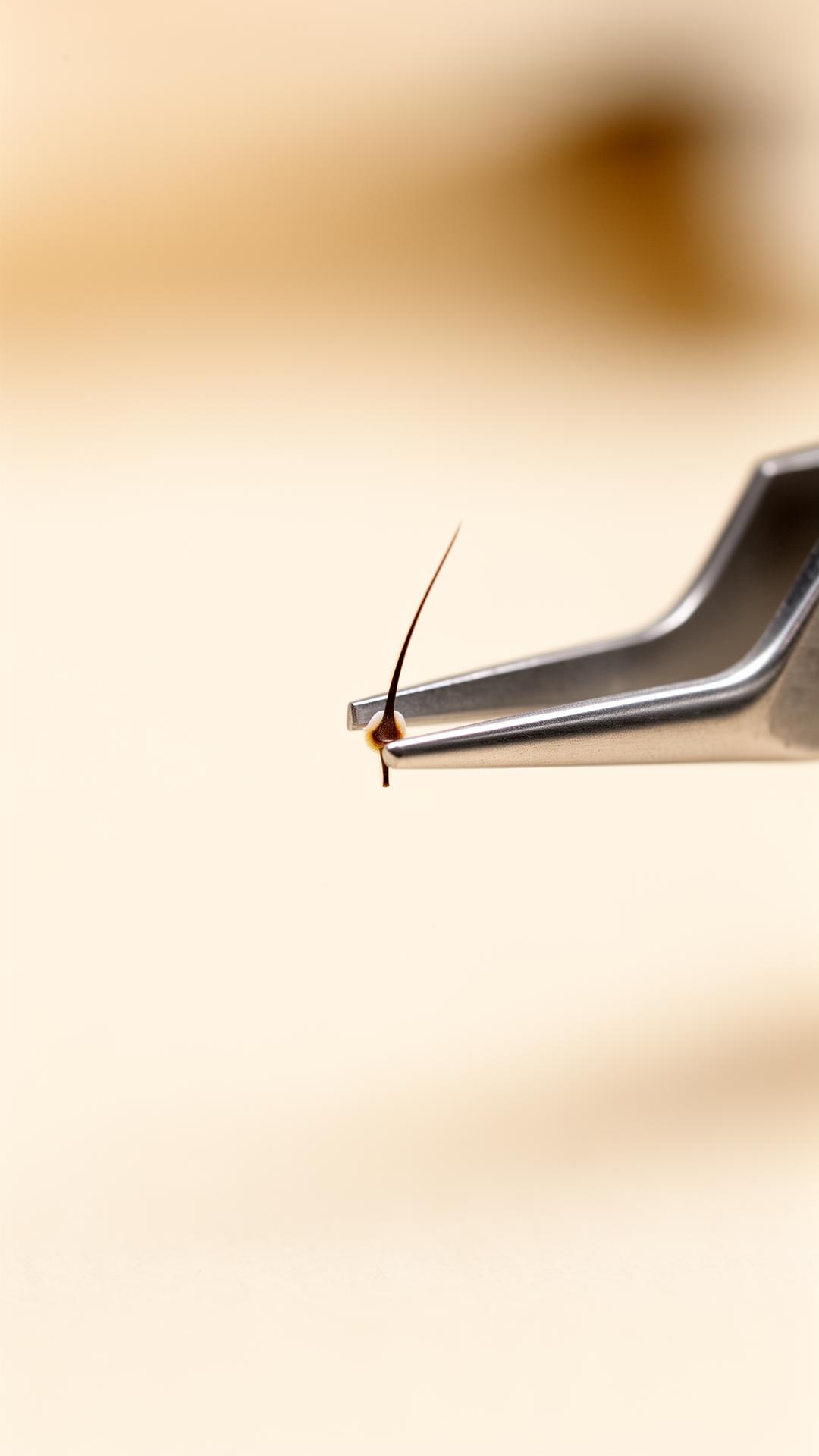
Why the FUE most patients are offered is no longer enough.
Standard FUE is now widely available in Malaysia and across the region. What is rarely available is FUE performed personally by the surgeon, within preserved hair, and as part of a private practice — rather than at the cadence of a high-volume clinic.
- 01
Donor zones are still routinely shaved
Most FUE protocols default to shaving the donor — and at times the entire scalp — making the procedure publicly apparent.
- 02
Speed is rewarded over architecture
High-volume sessions prioritise graft count over the angle, direction, and density transition that determine whether a result reads as the patient's own hair.
- 03
Hairline design is delegated
In many clinics, the most consequential step — drawing the hairline — is performed by a technician, not the doctor.
- 04
Aftercare is industrialised
Reviews are increasingly handled by support teams, with the operating surgeon rarely involved beyond the day itself.
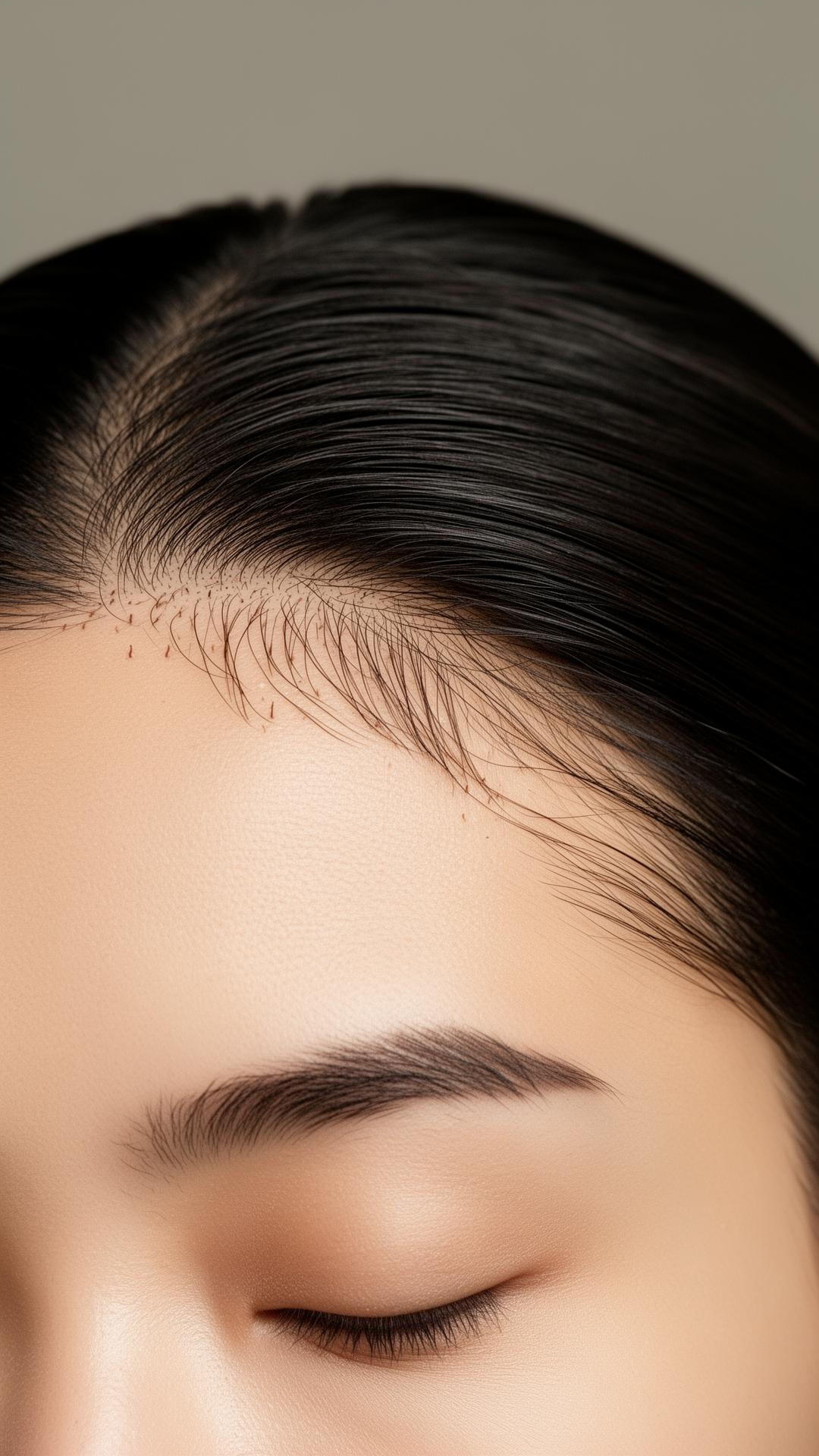
FUE, performed the way it was meant to be.
- 01No-shave selective extraction
Grafts are taken individually within the patient's own visible hair. No donor strip, no trimmed window.
- 02Doctor-led at every step
Hairline design, extraction strategy, and placement are performed personally by Datuk Dr. Inder.
- 03Architectural placement
Each graft is placed for angle, direction, and a calibrated density transition — softer at the frontal edge, fuller through the mid-scalp — so the result emerges naturally as it grows.
- 04Continuity of care
Three, six, and twelve-month reviews conducted by the surgeon, not by an aftercare team.
A protocol shaped around preserved hair.
Long Hair FUE is technically more demanding than standard FUE — extraction, handling, and implantation are all carried out within visible hair, which requires precision, patience, and careful planning. It is undertaken at a deliberately limited number of cases per year, by design rather than convenience.
- 01
Donor planning
The donor zone is finite. Reserve, density, and harvest distribution are mapped personally — calibrated to preserve future options across the patient's lifetime, not spent for a single session.
- 02
Selective extraction
Grafts are taken one at a time within preserved hair — distributed across the donor to avoid overharvesting, and read at full length rather than against a shaved field.
- 03
Hairline design in person
Drawn directly with the patient, calibrated to facial structure, age, ethnicity, and the way the hair is worn — and reviewed openly before placement begins.
- 04
Natural-angle placement
Each graft is placed at the angle, direction, and depth native to its zone, building a soft frontal edge and a graduated density transition that emerges naturally as the hair grows.
- 05
Immediate visual preview
By the end of the day, the intended hairline is visible within the patient's own length — before growth begins.
Healing carried beneath existing hair.
Because nothing is shaved, the recovery window is concealed by the patient's own length throughout. There is no visible procedure to recover from in front of others.
- 01
Day 0
The patient leaves with their hair worn as they arrived. No shaved zones.
- 02
Week 1
Quiet healing beneath surrounding hair, with most patients back at work within days.
- 03
Month 3
The early shedding phase passes entirely within preserved hair.
- 04
Month 12
Full character of the result is established — natural, integrated, the patient's own.
Patients for whom standard FUE is not enough.
The Long Hair FUE protocol is shaped for patients whose decision rests as much on discretion and naturalness as on the surgical work itself.
- 01
Executives and founders
Patients whose calendar cannot accommodate a visible recovery window.
- 02
Women
For whom shaving is not a starting point, and discretion is non-negotiable.
- 03
Patients with prior FUE
Considering refinement of earlier work, performed without disturbing existing hair.
- 04
Public-facing patients
Whose presence is part of their work — and cannot be paused.
FUE in Malaysia, explained with precision.
A short technical reference for patients beginning to consider FUE — written to clarify the method rather than promote it. Each entry opens onto a deeper part of the iGraft library.
- 01 · Foundations
What is FUE hair transplant?
Follicular Unit Extraction relocates individual follicular units — one to four hairs at a time — from the genetically protected donor zone into areas of thinning. The donor is not strip-harvested, and the units are placed individually at calibrated angles.
The Foundations - 02 · Comparison
FUT vs FUE.
FUT (strip surgery) removes a strip of donor tissue and leaves a linear scar. FUE removes follicles individually through micro-punctures, allowing the donor to be worn at any length. Long Hair FUE refines this further by preserving length throughout.
Inside the Technique - 03 · Extraction
How follicles are extracted.
Each unit is identified, scored, and lifted from the donor with a fine punch — selected for orientation, calibre, and survivability. In Long Hair FUE, this work is performed within visible hair, requiring measurably greater technical control.
The No-Shave Method - 04 · Long Hair FUE
Long Hair FUE explained.
Long Hair FUE is FUE undertaken without shaving the donor or recipient zone. Because the work is carried out within visible hair, it is technically more demanding — extraction, handling, and implantation each require greater precision and unhurried planning. The intended hairline is visible to the patient, within their own length, by end of day.
What Is Long Hair FUE - 05 · Donor
Why donor management matters.
The donor zone is finite. Reserve, density, and harvest distribution are planned across the patient's lifetime — extraction is dispersed to avoid overharvesting any one area, and future options are deliberately preserved. Donor protection is a long-term medical decision, not a procedural shortcut.
The iGraft Philosophy - 06 · Hairline
Natural hairline design.
Hairline design is the most consequential step in any FUE procedure. It is drawn personally by the doctor, calibrated to facial structure, age, ethnicity, and how the hair is worn — with a softened frontal edge that reads naturally rather than as a built line.
Design Principles - 07 · Implantation
Precision implantation.
Each graft is placed at a specific angle, direction, and depth — calibrated to its zone of the scalp. Density is graduated rather than maximal: softer single-hair units at the front, fuller multi-hair units behind, so the growth pattern emerges naturally and reads as the patient's own hair as it matures.
Placement Technique - 08 · Recovery
Recovery & healing.
Healing takes place beneath preserved hair. There is no shaved donor to grow back, no recipient zone to conceal, and no public phase of recovery to plan around.
The Patient Journey - 09 · Suitability
Suitability for men and women.
FUE is suitable for many — but not all — patients. Suitability is established medically and openly during private assessment, with candidacy decided on hair character and long-term plan rather than commercial fit.
Private Assessment - 10 · Beyond technique
Why technique alone is not enough.
Technique is a precondition, not a guarantee. The work that ages well is performed by an experienced doctor, in a private setting, with continuity of care across years — not by the speed of a single session.
Meet the Founder - 11 · Choice
Choosing an FUE clinic in Malaysia.
The most useful questions for any FUE clinic are quiet ones: who designs the hairline, who performs the extraction, who reviews the patient at month twelve. The answers reveal more than any package brochure.
Choosing a Clinic
FUE outcomes that read as the patient's own hair.
A small, considered library of FUE outcomes — shared with consent, photographed under consistent conditions, and reviewed personally by the doctor. Each result is documented with restraint and assessed in years, not months.
Documented · With Consent
FUE in Malaysia, answered plainly.
Quiet routes into the practice.
A short list of pages for patients who would prefer to read further before reaching out — outcomes, the consultation pathway, and the broader Malaysia guide.
- 01Explore
Hair Transplant Malaysia — The Guide
The pillar guide to hair restoration in Malaysia — context, technique, and the standard a patient should expect.
- 02Explore
Results
A documented library of male and female outcomes, photographed under consistent conditions.
- 03Explore
Male Hair Transplant Results
FUE outcomes for male patients across hairlines, temples, and the crown.
- 04Explore
Female Hair Transplant Results
FUE outcomes for female patients restored without shaving — length and hairline character preserved.
- 05Explore
Private Consultation
How to begin, in private — with Datuk Dr. Inder personally, in person or remotely.
- 06Explore
The Patient Journey
From first conversation to twelve-month review, attended to by the same doctor throughout.
- 07Explore
Frequently Asked
A grouped reference of considered questions, for patients who prefer to read before they speak.
Begin with a private FUE assessment.
An individualized, doctor-led review of donor reserve, hairline architecture, and suitability — confidential, calm, and at the patient's pace. Conducted personally by Datuk Dr. Inder in Kuala Lumpur, or remotely for patients elsewhere.
ABHRS Diplomate · ISHRS Fellow · 30+ Years Experience