The full body of work, across men and women.
The master gallery of iGraft Long Hair FUE — patient transformations across hairline, crown, temple, and corrective work, in men and women alike. The strongest examples of naturalness, discretion, Day 0 framing, donor concealment, and quiet artistry are gathered here.
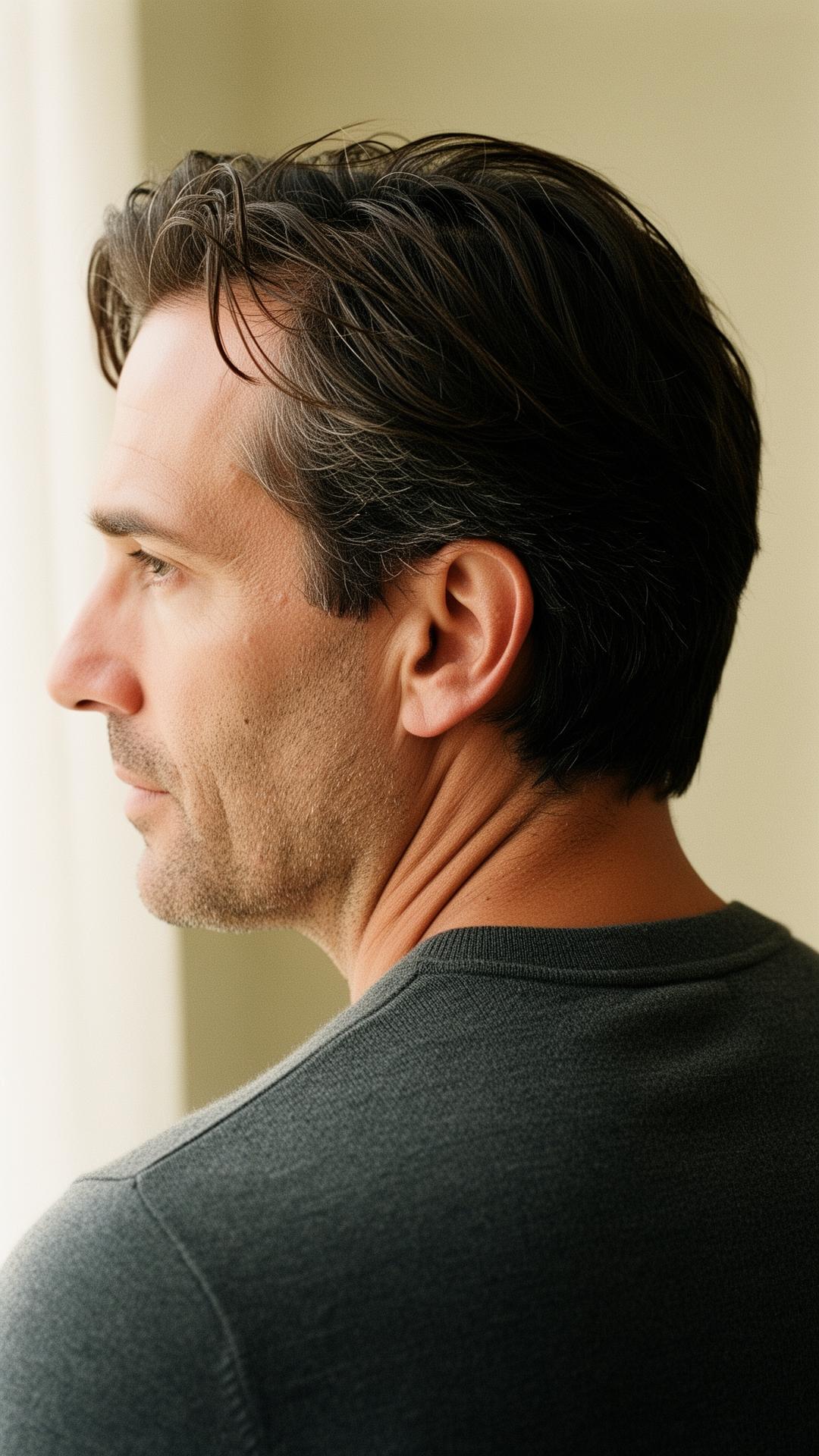
One standard of work, for every patient.
This page is not the men's gallery, nor the women's. It is the proof of iGraft Long Hair FUE itself — the standard of naturalness, discretion, and artistry that the technique is held to. Detailed male-specific and female-specific transformations are explored in dedicated context further down.
Studies, organised by concern.
Browse by concern, treatment area, and stage of growth.
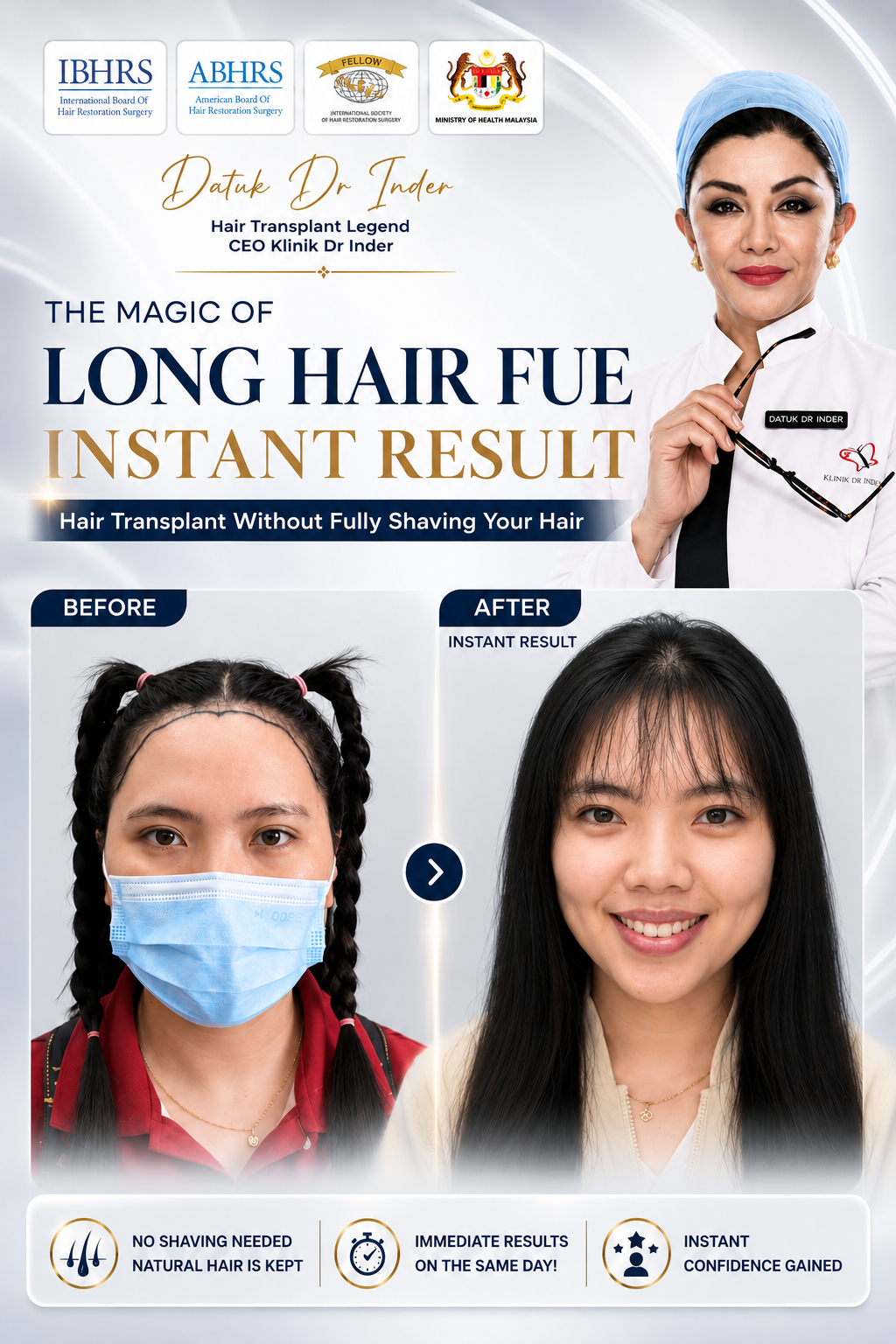 Frontal Line — Male01
A receding frontal line restored at a position true to facial proportion and age, framed within preserved surrounding hair.
- Concern
- Receding frontal line
- Area treated
- Frontal third
- Why Long Hair FUE
- Preserved hair throughout, executive recovery
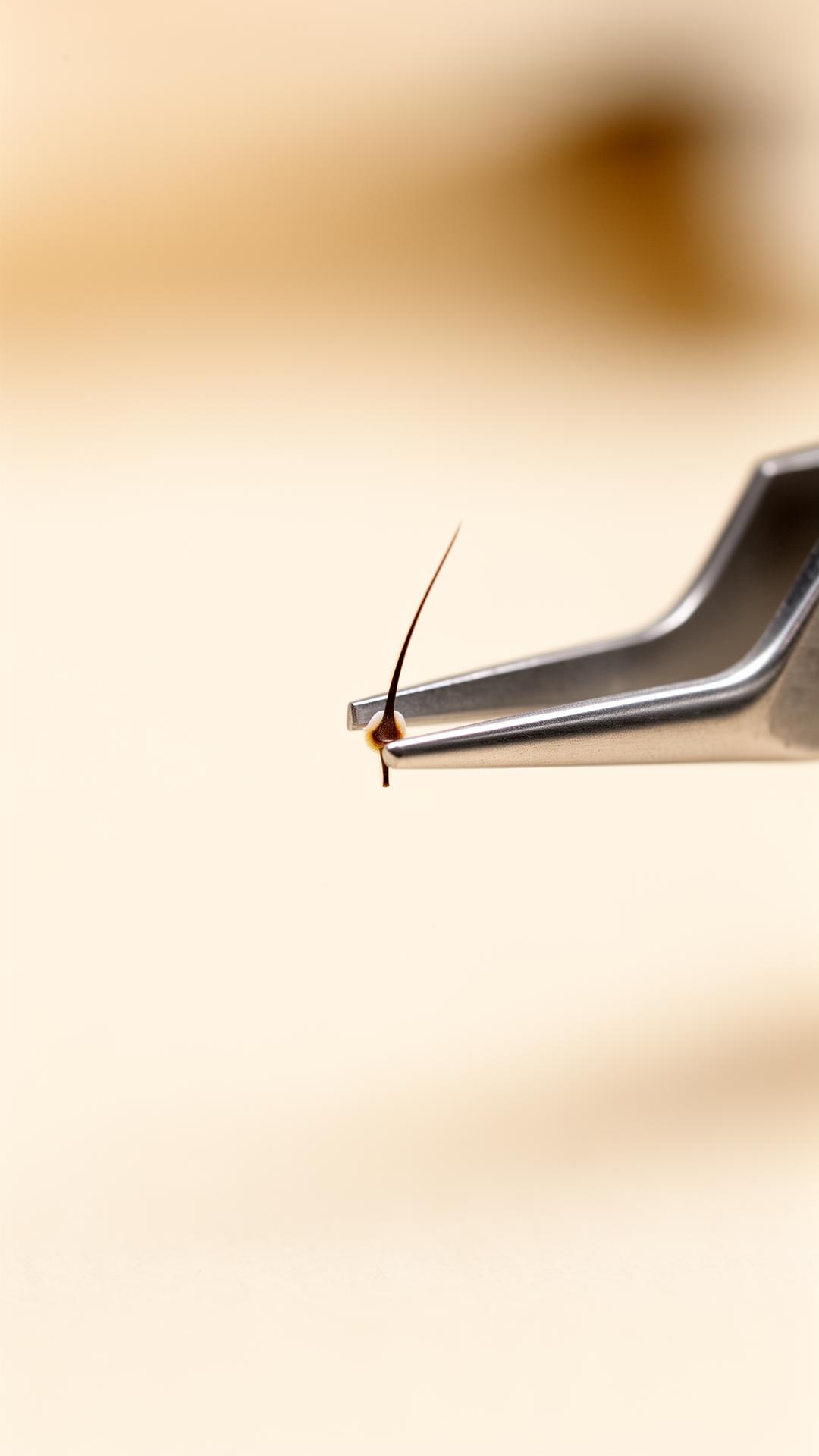 M-Shape — Male02
Frontal and lateral recession addressed as a single architecture, rebalancing the upper third of the face.
- Concern
- M-shape recession
- Area treated
- Frontal & lateral
- Why Long Hair FUE
- Single architecture, unified by hand
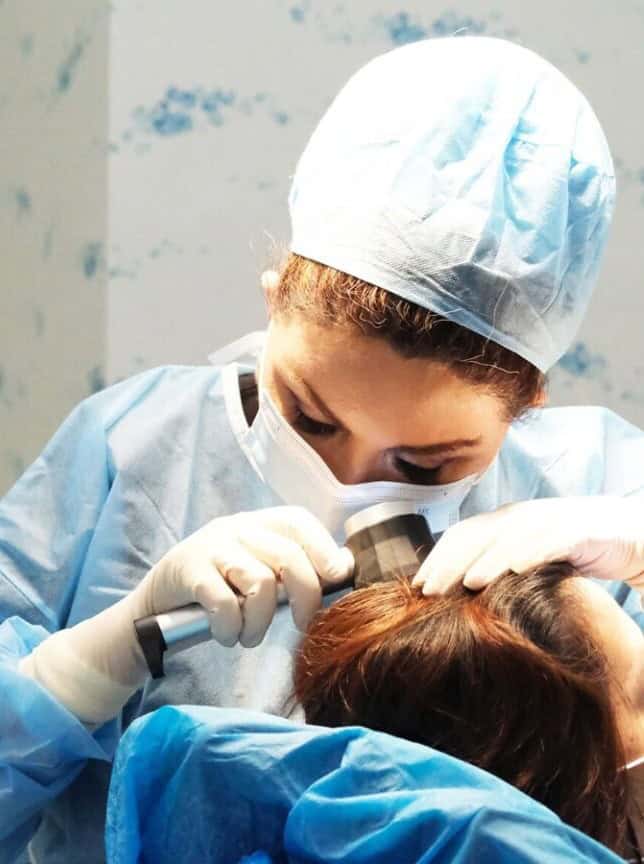 Crown — Male03
Density restored along the natural whorl, blended into surrounding hair so the recovery was never read.
- Concern
- Diffuse crown thinning
- Area treated
- Vertex / whorl
- Why Long Hair FUE
- Surrounding length concealed the recovery
 Hairline Lowering — Female04
A higher hairline brought into proportion with the face, performed entirely within preserved long hair.
- Concern
- Elevated hairline, broad forehead
- Area treated
- Frontal contour
- Why Long Hair FUE
- Performed within preserved long hair
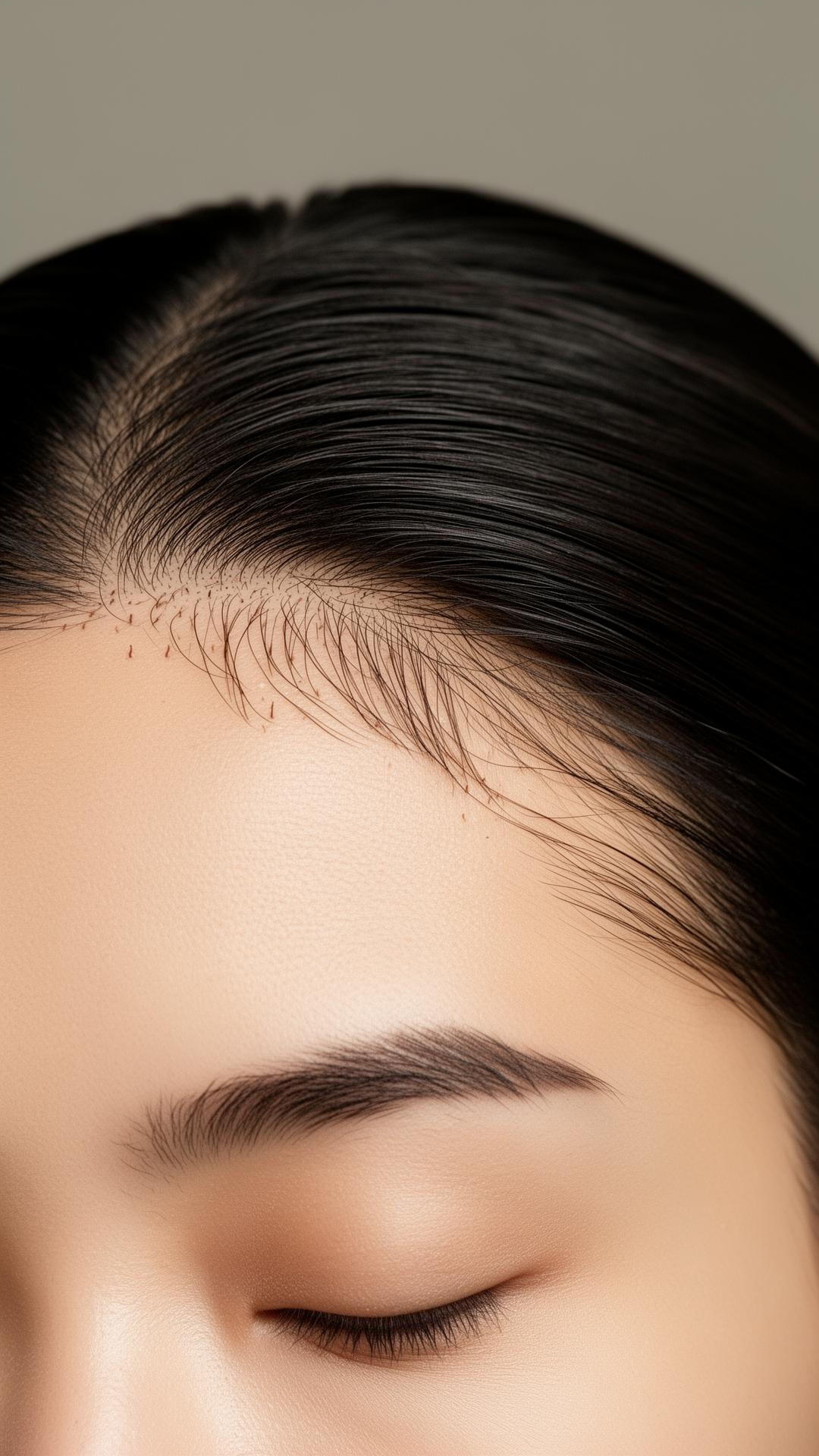 Part Line — Female05
Quiet density restored along a widening part line, integrated beneath preserved length and styling.
- Concern
- Widening part line
- Area treated
- Mid-scalp / part
- Why Long Hair FUE
- Integrated beneath existing styling
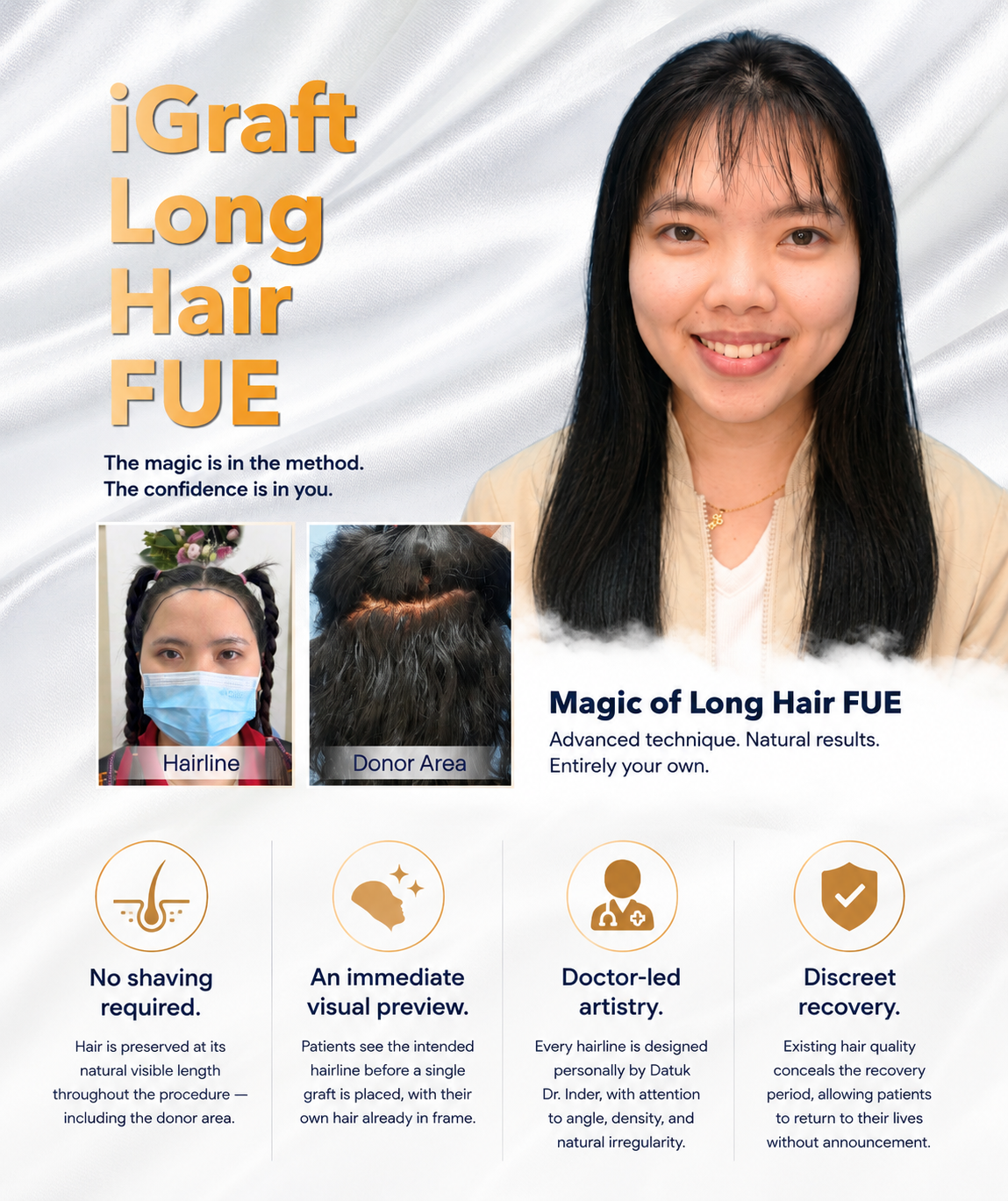 Temple — Female06
Lateral framing softened and restored without shaving, integrated into the existing silhouette.
- Concern
- Receded temples, lost side-frame
- Area treated
- Bilateral temples
- Why Long Hair FUE
- Restored without shaving the existing silhouette
- Temples — Male07
Lateral framing rebuilt to soften the M-shape and rebalance the face beneath surrounding hair.
- Concern
- Lateral recession
- Area treated
- Bilateral temples
- Why Long Hair FUE
- Continuous with the existing frontal line
- Donor — Male08
The donor area, weeks after the procedure, concealed entirely within the patient's own existing length.
- Concern
- Visible donor recovery
- Area treated
- Occipital donor
- Why Long Hair FUE
- No shaving — public life uninterrupted
- Donor — Female09
Donor zone read at full visible length throughout, with no styling change required.
- Concern
- Hairstyle continuity
- Area treated
- Occipital donor
- Why Long Hair FUE
- Long hair preserved completely — no styling change
See your hairline immediately.
Because surrounding hair is preserved throughout the procedure, many patients see the intended framing of their restored hairline on the same day — long before regrowth has even begun. It is a quiet but meaningful reassurance, and the first reason this work feels different from the start.
- 01
Surrounding hair preserved
No shaving means the existing hair continues to frame the face during and after the procedure.
- 02
Immediate framing preview
The intended position, density, and direction are visible the same day — within real, living hair.
- 03
Reassurance from the start
Patients leave with a clear sense of where the result is going, not only how it will eventually arrive.
How a result actually arrives.
The full character of a Long Hair FUE result emerges across months — quietly, and within the patient's own framing. Each stage is documented in identical conditions.
- 01
Before
Baseline study under standardised lighting and angle.
- 02
Day 0 Preview
An immediate visualisation of intended density and design within preserved hair. This is where Long Hair FUE is different — the restored framing can often be seen immediately within preserved hair.
- 03
Month 3
Initial shedding settles. Surrounding hair continues to conceal the working zones.
- 04
Month 6
Early growth integrates within the existing frame; direction begins to read as native.
- 05
Month 12
Full character of the result is established — coherent, integrated, the patient's own.
The qualities that make a result read as native.
Irregular leading edge
A hairline is a transition, not a line. Slight irregularity is what the eye recognises as natural.
Softness in transition
Density rises gradually behind the leading edge. Nothing arrives as a wall.
Facial framing
Position, curvature, and proportion are calibrated to the face — not to a template.
Density as artistry
Direction, angle, and follicular grouping are placed by hand. The work is restorative, not decorative.
Close detail, without the theatre.
The frontal line is a transition, not an edge. These close studies show how density softens at the leading edge and reads as the patient's own hair.
- Frontal EdgeSoft transition
- Female HairlineWithin preserved length
What the donor looks like, after.
Because no shaving is performed, the donor area is read at its visible length throughout. These studies show donor zones in the weeks following the procedure.
- Donor — Day 7Concealed
- Donor — Week 4Undisturbed
- Donor — FemaleWithin length
Studies, soon in moving image.
A small selection of patient and clinical studies will be shared here in moving form — observed quietly, never as marketing.
- Coming soonPatient JourneyComing soon
- Coming soonHairline Close-UpComing soon
- Coming soonDonor ConcealmentComing soon
- Coming soonDoctor ExplanationComing soon
What patients tend to say.
- 01
“I returned to work the same week. Nobody asked anything. The change arrived on its own time.”
Male patient · Frontal restoration
- 02
“It was the first time a doctor had drawn a hairline that actually looked like mine.”
Female patient · Hairline lowering
- 03
“I never had to wear a cap. My existing hair carried the entire recovery.”
Male patient · Crown restoration
Most work is shared in private.
By consent
Only patients who choose to share their studies appear publicly. Everything else remains private.
Reviewed in consultation
A wider archive of studies is reviewed personally with Datuk Dr. Inder during private consultation.
Confidentiality first
Identity, lifestyle, and timing are protected as a matter of course. Discretion is the default.
Explore results by patient journey.
The galleries below isolate male and female transformations in greater detail. For a private review of cases relevant to your own concern, the consultation remains the most considered place to begin.
Begin with a private hairline assessment.
Every patient's hairline, donor area, facial proportions, and restoration goals are unique. The first conversation is unhurried, founder-led, and held in considered private context.