On choosing a hair transplant clinic in Malaysia.
There is no single "best" clinic — only the right clinic for a given patient. The intent of this page is to help patients ask the questions that matter, before committing to a procedure that will be visible for years.
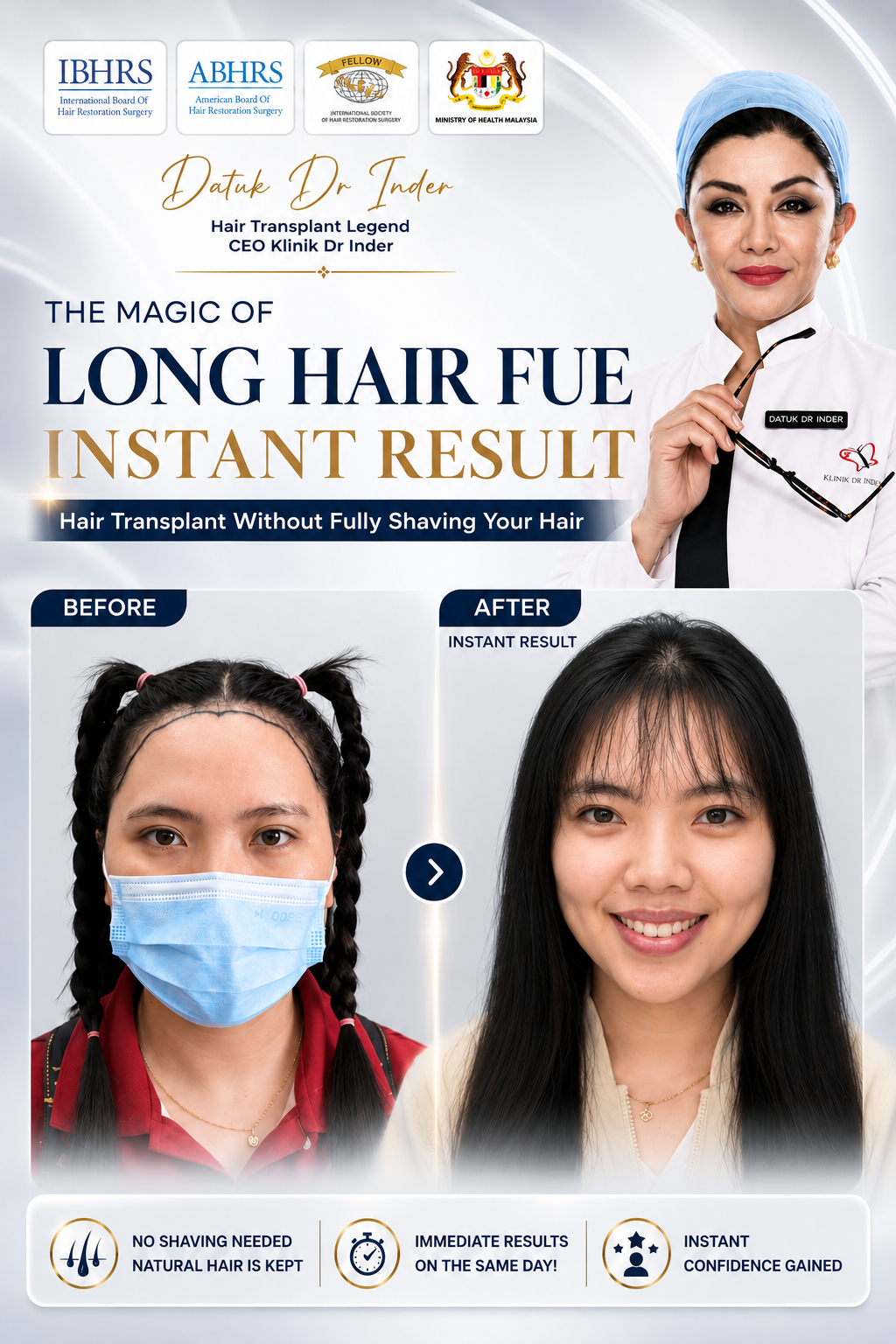
The questions that rarely reveal the real standard.
Patients often begin by comparing on price, graft count, or before-and-after photographs. These are useful reference points, but they rarely show how a case is planned, who performs the work, or how the result will read across the years that follow.
- 01
Per-graft price
A useful headline figure, but one that does not describe who designs the hairline, who places the grafts, how much time is given to the case, or how the donor is managed for the long term.
- 02
Maximum graft count
Larger sessions are not necessarily better sessions. Architecture, angle, density, and donor preservation matter more than total grafts placed in a single day.
- 03
Highly stylised before-and-after photos
Photographs are easily lit and selectively framed, and rarely show the donor area, the hairline at close range, or how the result has aged twelve months on.
- 04
Online reviews in isolation
A useful signal among several, but rarely sufficient on their own to evaluate hairline design, donor management, or the depth of follow-up across the first year.
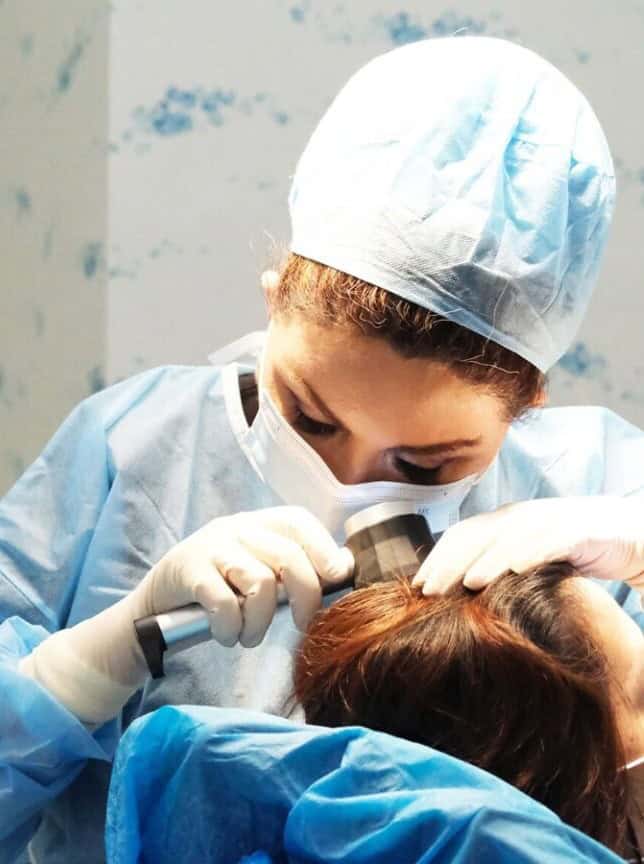
The questions worth asking, calmly.
- 01Who conducts the assessment?
A proper assessment is doctor-led — donor density, hair characteristics, scalp laxity, and likely progression are read in person before any plan is offered.
- 02Who designs the hairline?
Hairline design is the most consequential decision in the case. It should be drawn personally by the surgeon, with the patient, calibrated to facial structure, age, ethnicity, and how the hair is worn.
- 03How is the donor managed?
A finite donor reserve must be planned across the patient's lifetime — distributed, not overharvested — so that future options remain open if hair loss continues.
- 04Who performs extraction and placement?
Direction, depth, and density transitions define whether a result reads as the patient's own hair. These decisions should be made and executed by the doctor, not delegated.
- 05Is shaving required, and is it the patient's choice?
The no-shave method is more demanding to perform but more discreet to recover from. Whether to shave should be a clinical conversation, not a default protocol.
- 06How is expectation set?
A trustworthy clinic explains realistic outcome ranges, the role of donor reserve, and what a result will look like across years — not only at the first review.
- 07Who conducts the follow-up?
Three, six, and twelve-month reviews are part of the work. Continuity with the operating surgeon — rather than handover to an aftercare team — is part of how the result is judged and refined.
Where iGraft Long Hair FUE stands on each question.
These are the answers iGraft offers to the same set of questions — shared as a transparent reference for comparison with any other practice under consideration, not as a position of superiority.
- 01
Doctor-led assessment
Donor reserve, hair characteristics, scalp laxity, and likely progression are read in person by Datuk Dr. Inder before any plan is offered.
- 02
Hairline design
Drawn personally by the surgeon, with the patient, in person — calibrated to facial structure, age, ethnicity, and how the hair is worn. Never delegated.
- 03
Donor management
Selective extraction is distributed across the donor field to preserve density and reserve future options, rather than concentrated for a single high-volume session.
- 04
Extraction and placement
Extraction and graft placement — angle, direction, and depth — are performed by the surgeon throughout, supported by an experienced, well-trained team.
- 05
Long Hair FUE expertise
Performing the procedure within preserved hair is technically more delicate than shaved-donor FUE. Long grafts require careful handling and precise implantation, conducted at a deliberate pace.
- 06
Discreet recovery planning
Every iGraft procedure is performed entirely within the patient's own visible hair, so the recovery does not require explanation in family or professional life.
- 07
Follow-up by the doctor
Three, six, and twelve-month reviews are conducted personally by the surgeon — in person where possible, with continuity across the first year and beyond.
- 08
Boutique by design
A deliberately limited number of patients per year. Depth of attention per case is the metric, not throughput.
What iGraft does not claim.
Part of being the right practice for a given patient is being honest about what cannot be promised. The principles below are held without exception.
- 01
No guaranteed outcomes
A hairline is read in person. Outcome ranges are explained honestly — never overstated.
- 02
Not every patient is a candidate
Recommending against surgery — when appropriate — is part of the standard.
- 03
Not the lowest-priced option
iGraft is positioned around depth of attention, not on price competition.
- 04
Not a high-volume clinic
A deliberately small number of patients per year, by appointment only.
Patients for whom the answers above matter.
iGraft is shaped for patients whose decision rests on the standard of the work, the discretion of the experience, and a relationship with the same surgeon across the years that follow.
- 01
Discretion-first patients
For whom privacy is a clinical requirement, and a recovery that does not require explanation is part of the plan.
- 02
Naturalness-first patients
Who would rather be recognised than announced, and value a hairline calibrated to their own face rather than a template.
- 03
Patients valuing continuity
Who want the same surgeon across consultation, procedure, and the first-year review programme.
- 04
International patients
Coordinated calmly across travel, scheduling, and follow-up — with consultation possible remotely before any in-person visit.
- 05
Patients seeking honest counsel
Who would rather hear the right answer — including when surgery is not the right step — than an easy one.
On choosing well in Malaysia.
A considered decision, begins with a private conversation.
A doctor-led assessment in complete confidence — to consider whether iGraft is the right fit, honestly.
ABHRS Diplomate · ISHRS Fellow · 30+ Years Experience