The side contour, softly refined.
For women whose temples have quietly receded — narrowing the side framing, exposing the silhouette when hair is tied — a no-shave refinement that restores soft contour continuity without disturbing what surrounds it.

How temples shape the feminine silhouette.
The temples are rarely the loudest concern, but they hold a quiet structural role — softening the side contour, defining the upper silhouette, and carrying much of what we read as feminine delicacy around the face.
- 01
They shape the side contour
Temple density softens the line between hair and skin at the side of the face — the contour the eye reads first in profile.
- 02
They carry tied-hair visibility
When hair is tied, swept back, or styled away from the face, the temples become the most exposed and the most read part of the silhouette.
- 03
They influence facial delicacy
A softly held temple frame supports the impression of feminine harmony around the brow, cheekbone, and jaw.
- 04
They are noticed quietly
Most women sense the change long before anyone else does — in photographs, in profile, and in the small moments they pass a window.
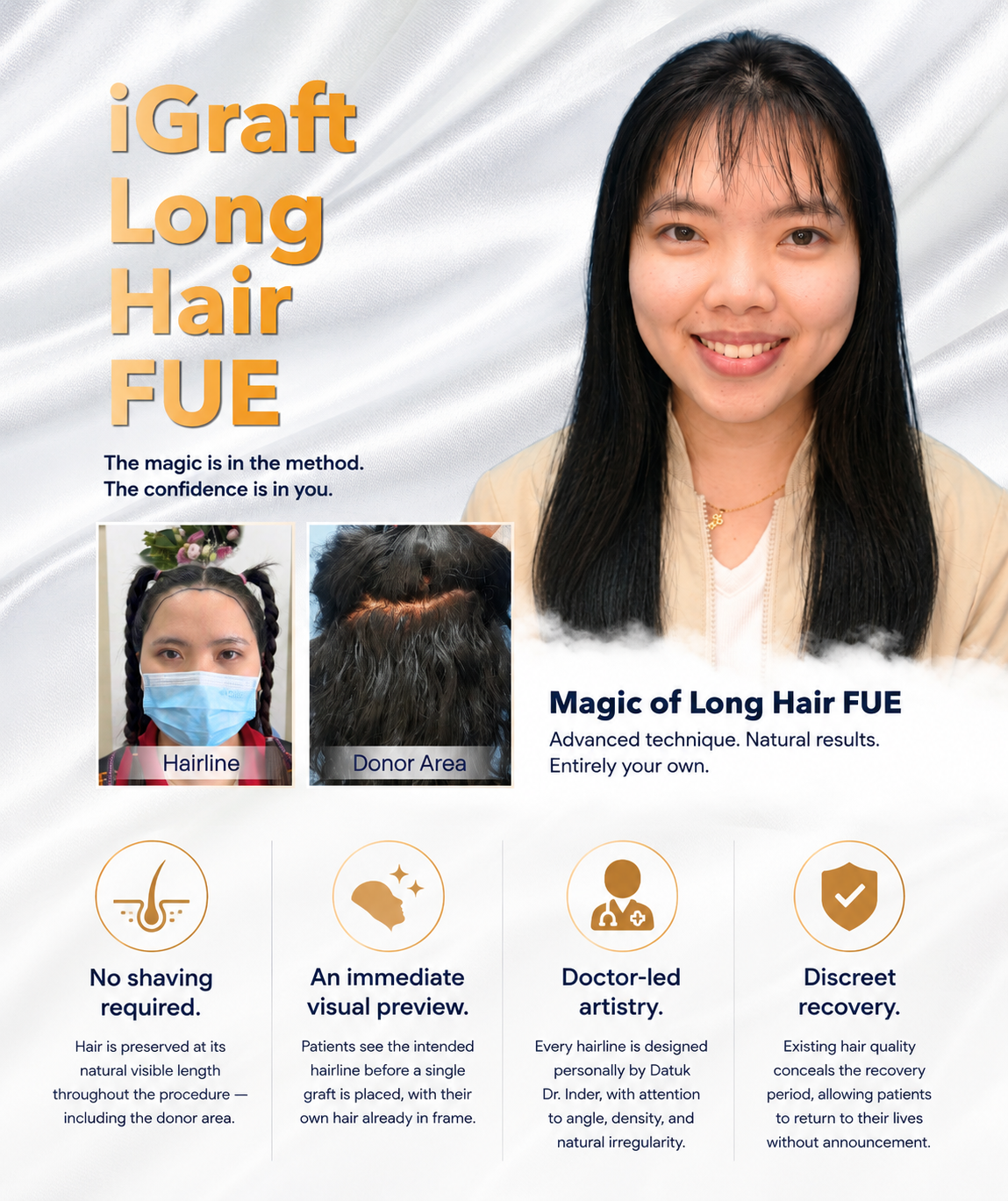
A philosophy of subtle side framing.
- 01Refinement, not reconstruction
The intention is gentle continuity of the existing frame — never a dramatic rebuilding of the temple as a new feature.
- 02Believable softness over density
A temple that reads as soft and continuous is more feminine than one that reads as full. Volume is never the goal in itself.
- 03Avoiding harsh reconstruction
Sharp boundaries, dense walls of hair, and over-corrected temples are markers of cosmetic intervention. The refined alternative is a gentle transition the eye does not register.
- 04Single-hair work, throughout
Multi-graft placement is rarely appropriate at the temples. The work is performed one follicle at a time, or it is not performed at all.
Restoring softness where it is most read.
Temple thinning often becomes most apparent when hair is tied back, pinned, or styled away from the face. Refining the side contour restores quiet continuity in the very moments the silhouette is most exposed.
- 01
A continuous side contour
Density is rebuilt as a soft transition rather than a uniform fill — the way the eye reads a familiar face in profile.
- 02
Direction matched to the existing fall
Each graft is placed at the angle and orientation of the surrounding hair, so the contour reads continuously with what is already there.
- 03
A density gradient, not a wall
The fade from fine vellus to fuller hair is preserved as a gradient — believable, soft, and proportionate to the patient's own hair.
- 04
Surrounding length untouched
Hair around the temples remains at its full visible length throughout. The frame is never disturbed in service of restoring it.
- 05
Designed personally
Every temple plan is drawn and performed personally by Datuk Dr. Inder, in a setting calibrated entirely for the patient's privacy.
A familiar appearance, throughout the process.
Because surrounding length is preserved, healing happens within the patient's own hair. Daily life continues with a familiar appearance — though aftercare, gentle handling, and realistic timelines remain part of the process.
- 01
Day 0
The procedure ends within preserved hair. The side framing reads as her own from the moment she leaves.
- 02
Days 3–7
Gentle aftercare, careful styling, and short-term care of the temple area. Most routines resume within a few days.
- 03
Months 3–6
New growth establishes within the existing frame — quietly, gradually, and at a realistic pace.
- 04
Month 12
The full refinement of the side contour emerges, integrated entirely into the surrounding hair.
Where surrounding density is the patient's quiet advantage.
Women who notice temple softening usually retain strong density across the surrounding hair. That existing fullness is precisely why no-shave refinement is the more considered approach.
- 01
Surrounding density is preserved
Existing fullness around the temples is the foundation of a refined result — not something to disturb in pursuit of one.
- 02
Hairstyle continuity is maintained
Tied styles, side parts, and tucked-back arrangements remain available throughout — there is no shaved interval to navigate.
- 03
Visual contrast is reduced
Healing reads against the patient's own hair rather than against bare skin, keeping the side framing quietly continuous.
- 04
Subtle integration, not reconstruction
Single-follicle work reads into the surrounding hair as a soft transition — never as a reconstructed feature.
A side contour that reads as her own.
Outcomes are reviewed quietly and discussed only in the context of the patient's own face and silhouette. The intent is refinement that integrates so completely it is recognised as her own hair — not a restored feature.
Patient studies shared privately during consultation
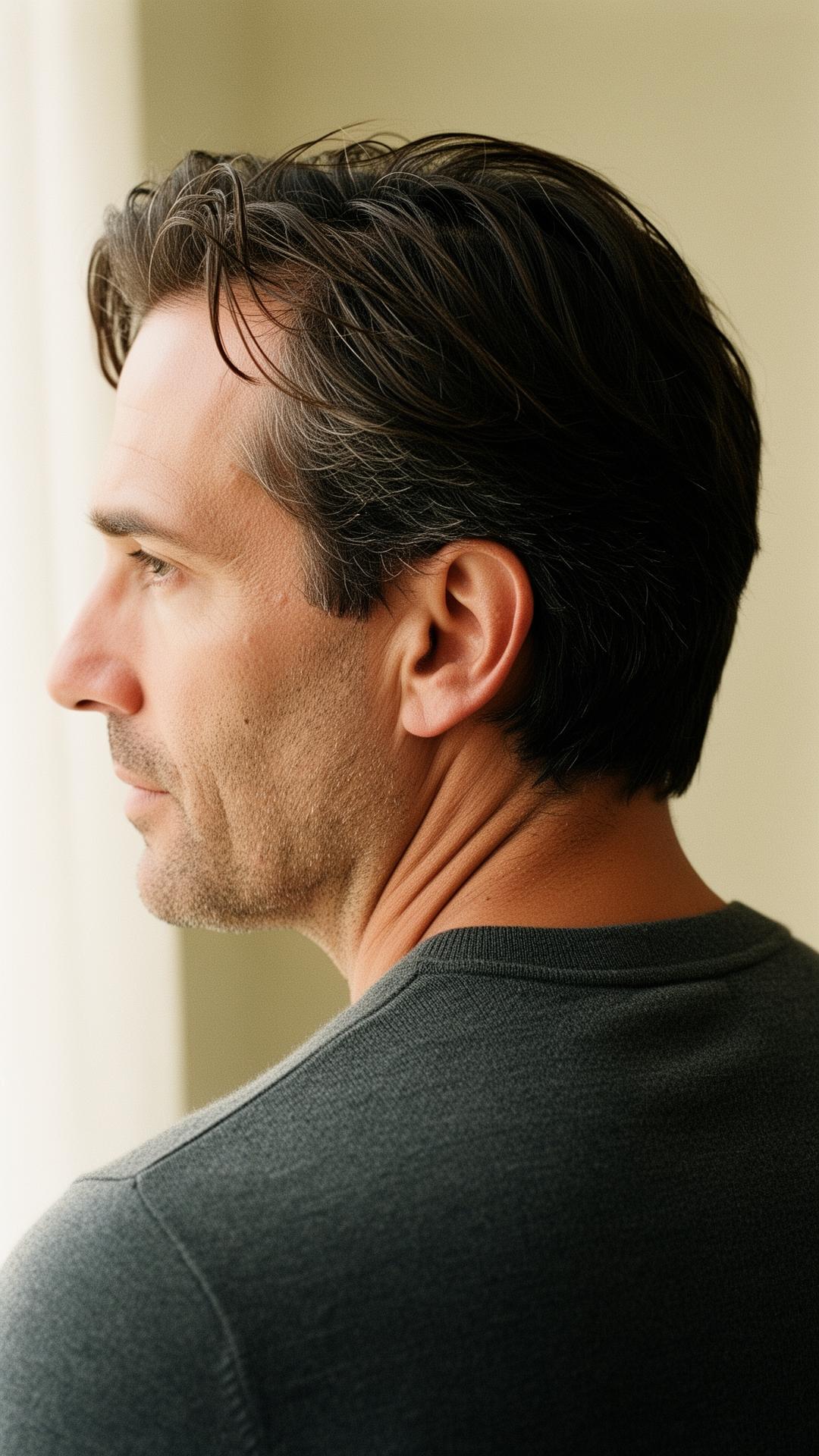
Considered questions.
Considered reading for women.
Adjacent perspectives within the same feminine register — each focused on a different concern, kept in the same quiet, contour-led tone.
- 01Explore
Long Hair FUE for Women
The broader feminine hub — soft framing, directional harmony, and continuity of appearance across the years.
- 02Explore
Hairline Lowering
A gently lowered, harmonious hairline — for women whose forehead has always read taller than the rest of the face.
- 03Explore
Without Shaving
For women whose hair is part of daily life — a method designed around hairstyle continuity and discreet recovery.
- 04Explore
Private Consultation
An unhurried, doctor-led conversation with Datuk Dr. Inder — by appointment, in complete privacy.
Side framing, softly her own.
An unhurried, private conversation with Datuk Dr. Inder — about your temples, the contour you recognise as yours, and whether a refined no-shave approach aligns with your long-term appearance.
ABHRS Diplomate · ISHRS Fellow · 30+ Years Experience