Hair transplant — without shaving the head.
Yes — in selected cases, a hair transplant can be performed without fully shaving the head. Often described as a no-shave or unshaven hair transplant, this approach is more precisely known as Long Hair FUE: a refined technique designed to preserve the patient's existing hairstyle as much as the case allows. Suitability is always confirmed through personal medical assessment.
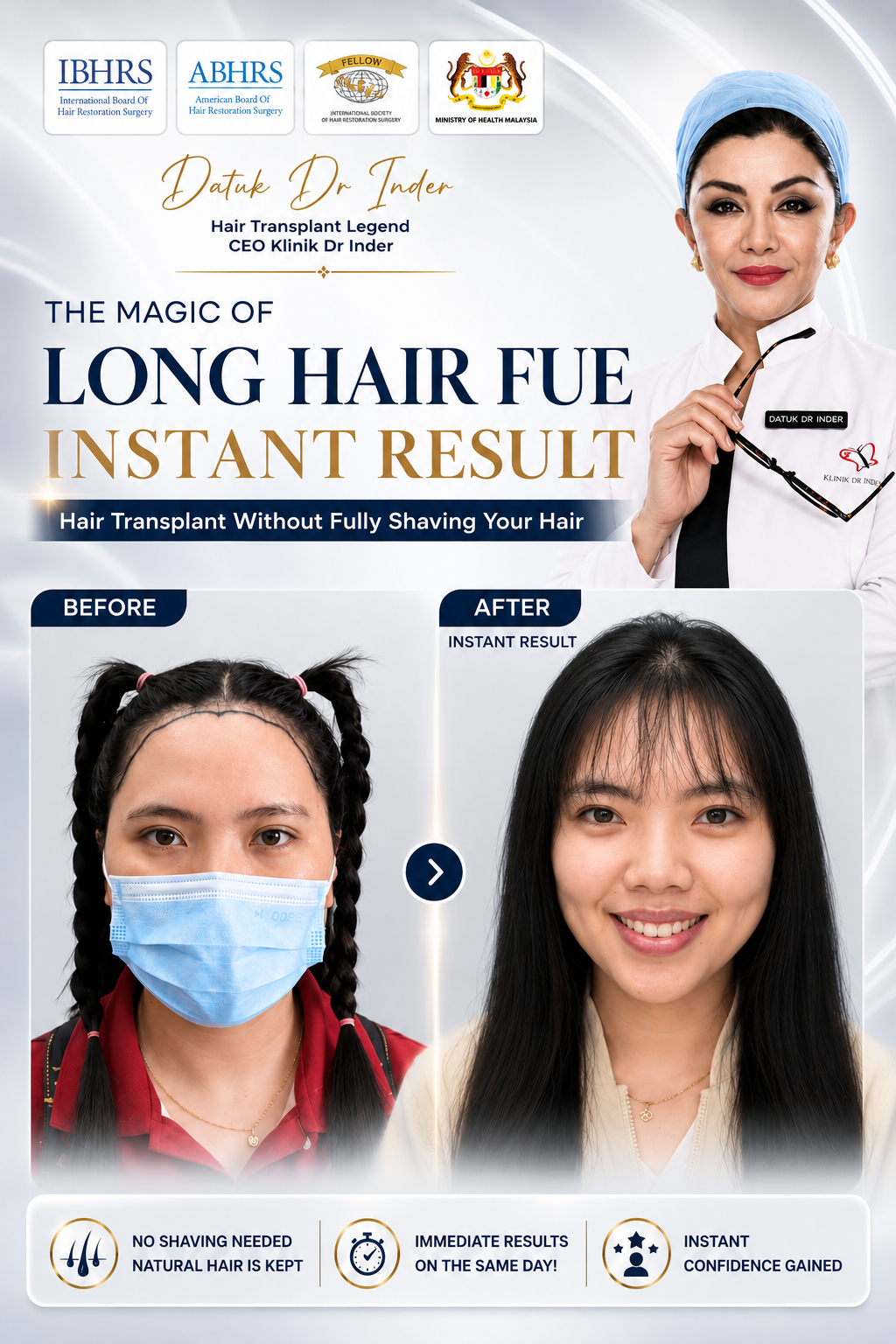
The reason this question comes up so often.
Most patients delay hair restoration not because of the procedure itself, but because of what surrounds it — the visibility, the explanations, the time away. A no-shave approach is often the first reason they take the conversation seriously.
- 01
The shaved-head look
Many patients simply do not want to walk out of a clinic with a fully shaved scalp.
- 02
Visible recovery
A traditional procedure can be visible for weeks. Most lives do not have room for that.
- 03
Workplace questions
Colleagues, clients, and meetings make obvious recovery uncomfortable for many professionals.
- 04
Social attention
Most patients prefer the result to be noticed — not the process behind it.
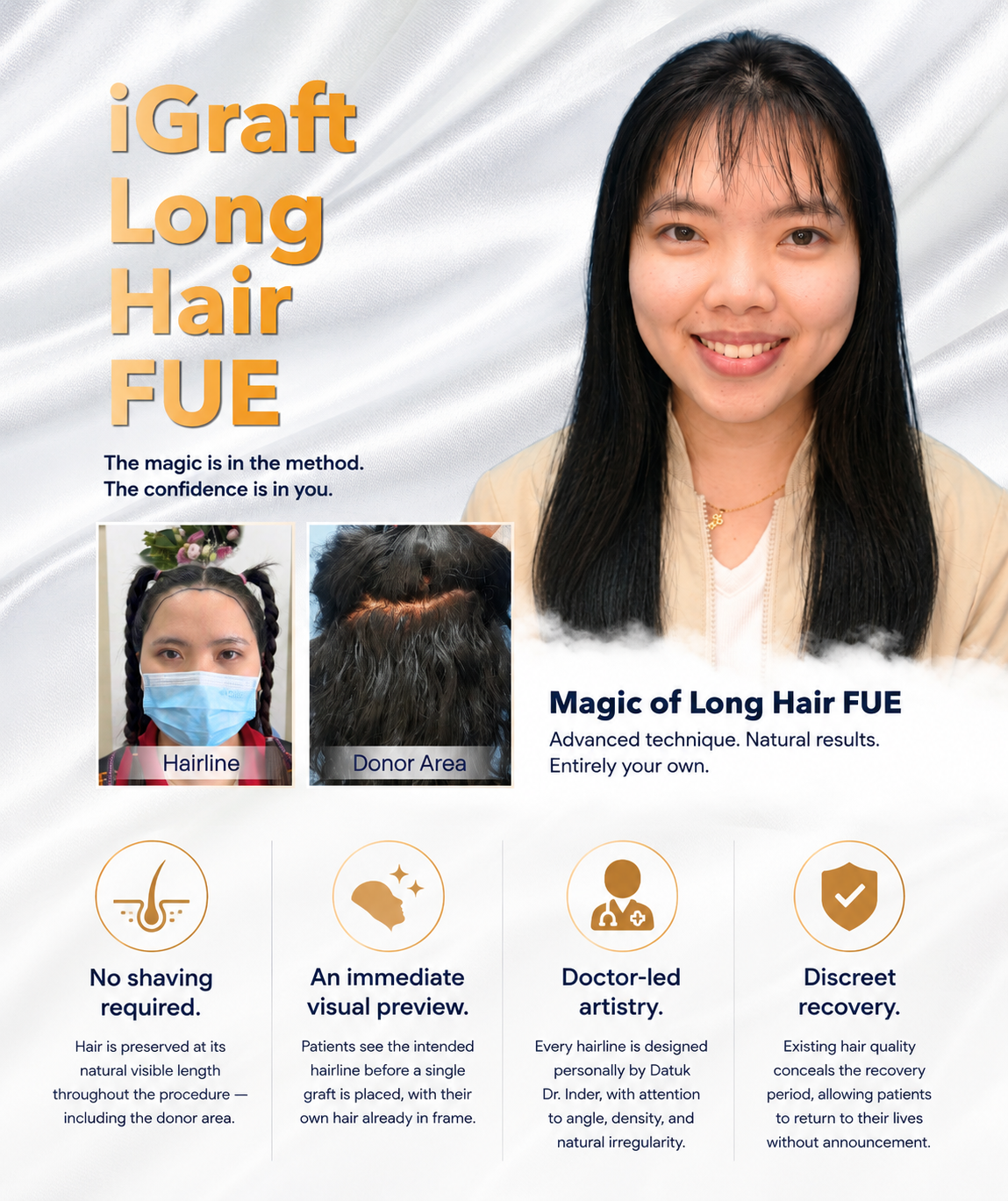
How a transplant can be done without full shaving.
- 01Existing length is kept
Instead of shaving the whole scalp, the team plans extraction and implantation around the patient's preserved hair length.
- 02Suitability is assessed
Whether a fully unshaven approach is possible depends on donor area, hair characteristics, and the number of grafts required.
- 03Some trimming may apply
In larger cases, limited trimming in a small donor zone may still be needed. Your surgeon will explain this clearly.
- 04It is doctor-led
The decision is always made through clinical assessment — not as a marketing promise made before the patient is seen.
What this approach is commonly used for.
Long Hair FUE is most often considered for patients with early to moderate concerns, where the surrounding hair is healthy enough to conceal the procedure and the recovery.
- 01
Receding hairline
Restoring frontal definition without disturbing the hair already framing the face.
- 02
M-shaped hairline
Refining the temples and softening the corners while existing hair is preserved.
- 03
Crown thinning
Adding density at the crown without shaving the surrounding scalp.
- 04
Female hairline concerns
Lowering or refining the hairline for women who could never consider a shaved approach.
- 05
Temple thinning
Rebuilding temple coverage gently within the patient's natural framing.
- 06
Selected density concerns
Adding fullness in specific areas where surrounding hair can support the transition.
What this approach is not.
It is important to be clear. A hair transplant without shaving is still a real medical procedure. It improves discretion — it does not remove the biology of healing.
- 01
Not no healing
There is still a recovery period. Aftercare matters, and the scalp needs time to settle.
- 02
Not no aftercare
Gentle washing, sleeping positions, and follow-up reviews remain part of the process.
- 03
Not no shedding
Transplanted hairs typically shed in the first weeks before regrowing. This is normal and expected.
- 04
Not instant results
Final density develops gradually over 9–12 months — not overnight.
Who tends to explore this option.
Patients are different, but those who consider a no-shave approach often share one thing in common — they want a real result without pausing the rest of their life.
- 01
Women
For whom shaving was never on the table, and discretion is a baseline.
- 02
Executives
Patients whose calendar simply cannot make space for visible recovery.
- 03
Professionals
People in client-facing or team-facing roles who prefer to keep the decision private.
- 04
Public-facing individuals
Those whose appearance is part of how they are seen and how they work.
- 05
Privacy-conscious patients
Anyone who prefers the result to speak for itself, quietly.
- 06
Patients with limited downtime
Those who cannot disappear from their lives for several weeks.
Common questions.
Continue your research.
- 01No-shave hair transplantHow discretion is built into the procedure for executives and public-facing patients.
- 02Unshaven hair transplantWhat unshaven actually means in practice, and where its limits sit.
- 03The iGraft techniqueExtraction, handling, and implantation as practised within Long Hair FUE.
- 04The iGraft philosophyThe principles that shape how each case is assessed and planned.
A simple first conversation.
Discover whether a hair transplant without full shaving is suitable for your hair, your goals, and your lifestyle.
ABHRS Diplomate · ISHRS Fellow · 30+ Years Experience