The iGraft Technique — a precision Long Hair FUE methodology.
A surgical methodology built around a single technical premise: preserving visible hair length throughout the procedure. Every stage — donor assessment, extraction, graft handling, implantation direction, and integration — is sequenced and executed to honour that constraint.
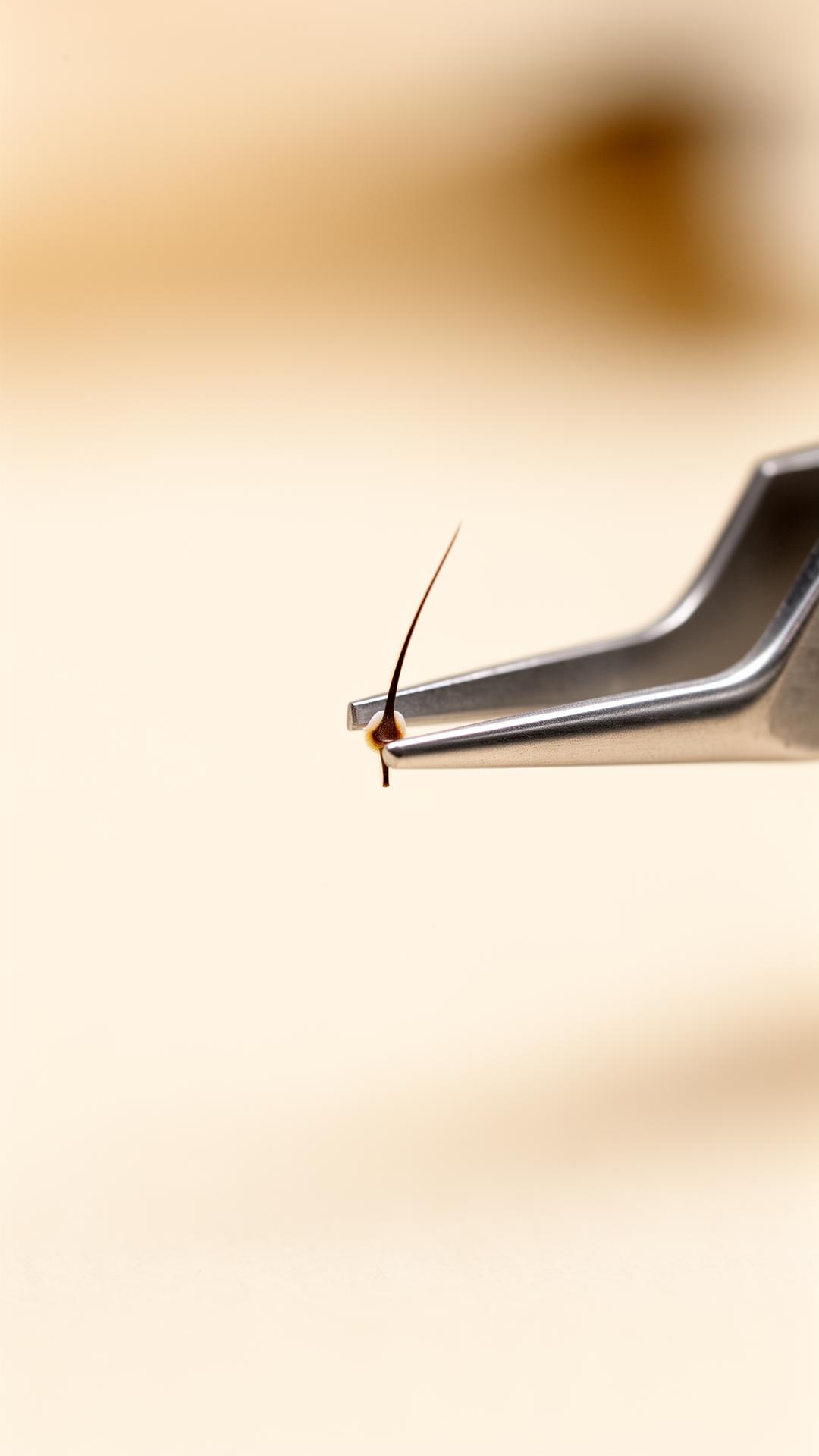
Why preserved length changes the procedure.
Conventional FUE is engineered around a shaved field — the donor surface is cleared so follicular units read clearly and extraction can proceed at speed. Preserving visible length removes that simplification and re-shapes the entire workflow.
- 01
Visibility management
The working surface is read through and around existing hair shafts rather than across an exposed scalp. Lighting, magnification, and parting are continually adjusted.
- 02
Extraction workflow
Each follicular unit is isolated within preserved hair before the punch is engaged. Cadence is slower; the unit of work is the individual graft, not the row.
- 03
Graft handling
Grafts retain visible shaft length. Orientation, holding, and transfer are managed so the shaft is not compromised and the bulb remains intact.
- 04
Implantation direction
Recipient sites are created within an existing directional field. Angle and depth are matched to surrounding hair, not designed onto a blank surface.
- 05
Donor concealment
Surrounding length conceals the working zone before, during, and after extraction — but only if extraction is distributed correctly across the donor area.
- 06
Procedural sequencing
Mapping, extraction, site creation, and placement are sequenced to maintain visible coverage at every stage of the day.
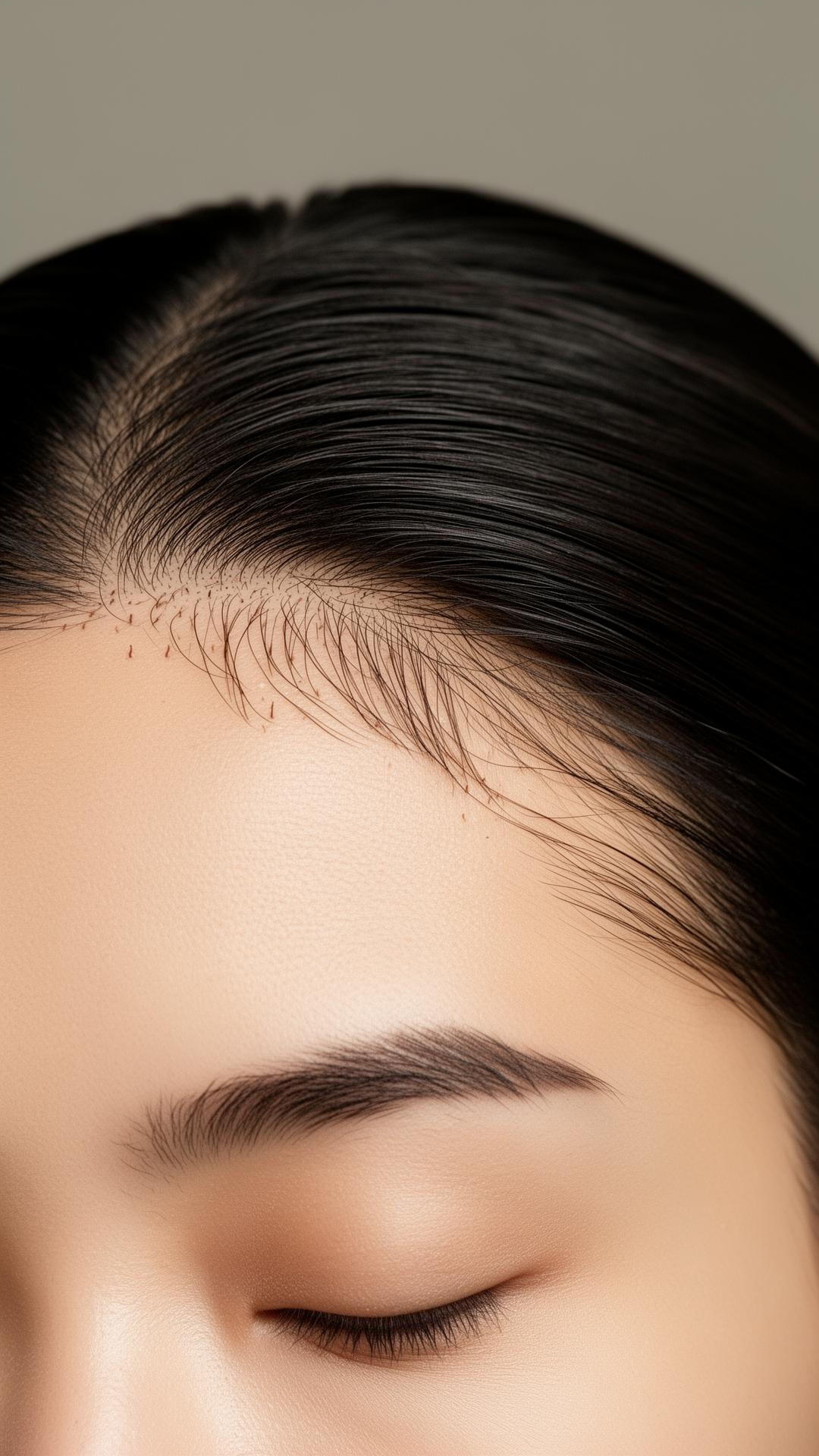
The donor area is planned, not harvested.
- 01Donor assessment
Density, calibre, direction, and miniaturisation are read across the donor zone before any extraction is proposed. The capacity of the donor is established first.
- 02Selective extraction
Follicular units are selected individually and distributed across the donor area to preserve uniform appearance, rather than concentrated in convenient rows.
- 03Long-term donor management
Planning accounts for future sessions and the natural evolution of the donor over years — not only the immediate graft requirement.
- 04Preserved donor appearance
The visible character of the donor — length, density, parting behaviour — is treated as a clinical asset to be protected, not a surface to be cleared.
- 05Capacity over count
Plans are framed by what the donor can sustainably provide. Graft count is an output of the assessment, not a target set in advance.
Direction, depth, and natural framing.
Implantation is the stage where technical precision becomes visible. Within preserved hair, every site is read against an existing directional field — and judged on integration, not isolated density.
- 01
Angle matching
Each recipient site is created at the angle of the hair it will sit beside, so emerging grafts continue the existing direction of growth.
- 02
Directional planning
Direction is mapped across zones — frontal, mid-scalp, crown, transition — before site creation begins, so flow remains coherent.
- 03
Natural framing
Hairlines are designed as soft boundaries with controlled irregularity, calibrated to facial structure and age, never as a hard line.
- 04
Transition density
Density is graded between zones so frontal, mid-scalp, and crown read as a continuous field rather than discrete patches.
- 05
Integration with existing hair
Sites are placed in relation to native follicles — beside, behind, and between — so growth integrates rather than overlays.
- 06
Soft natural hairline philosophy
The frontal line is treated as a gradient of single units transitioning to multi-unit grafts behind it. Definition is built through irregularity, not uniformity.
Natural integration, not maximum density.
The objective of the technique is not the highest possible graft count. It is a result that reads as native hair across years — calibrated for visual balance, realistic framing, and long-term aesthetic planning.
- 01
Visual balance
Density is distributed in proportion to facial structure and surrounding hair, not concentrated for short-term effect.
- 02
Realistic framing
Hairlines are designed for the patient's age and likely evolution, not for the day of the procedure.
- 03
Long-term planning
Each session is positioned within a multi-year view of donor capacity and aesthetic outcome.
- 04
Native-reading result
Integration is judged by how the result behaves in motion, lighting, and parting — not by graft count alone.
A sequence engineered around preserved hair.
The protocol is organised so visible coverage is maintained at every stage. Planning, extraction, site creation, and placement are sequenced — not improvised.
- 01
Planning sequence
Donor mapping, hairline design, and graft distribution are completed before any instrument is engaged.
- 02
Visibility management
Lighting, parting, and magnification are adjusted continuously so the working zone remains readable within preserved hair.
- 03
Implantation workflow
Site creation and placement are staged so grafts spend minimal time outside the body and orientation is preserved.
- 04
Procedural organisation
The team operates within a defined sequence — each role calibrated to the technical demands of preserved length.
Considered answers.
Adjacent material.
- 01What is Long Hair FUEA clinical definition of the procedure and how it differs from standard FUE.
- 02No-Shave Hair TransplantHow an unshaven approach is planned and where it is appropriate.
- 03Long Hair FUE for MenApplication of the technique to male hairline, M-shape, and crown cases.
- 04Long Hair FUE for WomenHow the technique is adapted to female hairline and density restoration.
- 05ResultsDocumented outcomes recorded in consistent conditions.
- 06Private ConsultationAn in-person assessment with Datuk Dr. Inder.
A technique, assessed in person.
Suitability for the iGraft Technique depends on hair characteristics, donor pattern, recovery expectations, and long-term goals. A direct assessment is the appropriate first step.
ABHRS Diplomate · ISHRS Fellow · 30+ Years Experience