Crown restoration, blended into your own hair.
Crown thinning is rarely a question of coverage alone. It is a question of blending — of direction, transition, and how density reads from the angles you cannot see yourself. A measured, no-shave approach designed around the natural swirl and the surrounding hair that already lives there.

Crown thinning is often noticed by everyone else first.
Most patients do not see their own crown clearly. The discovery tends to arrive sideways — through a photograph, a reflection, or a quiet remark — and only then does the pattern become impossible to unsee.
- 01
Overhead photographs
A group photo taken from a slight height shows what the bathroom mirror cannot — the way the swirl is opening at the centre.
- 02
Restaurant and meeting-room lighting
Recessed downlighting, wedding venues, and conference rooms reveal scalp show-through that softer, ambient light politely conceals.
- 03
Elevators, lobbies, and CCTV
Mirrored ceilings and overhead camera angles produce a top-down view of one's own crown — usually for the first time, and rarely flatteringly.
- 04
A passing comment from someone close
Crown change is often surfaced gently by a partner, sibling, or hairdresser — people who see the top of the head from above as a matter of routine.
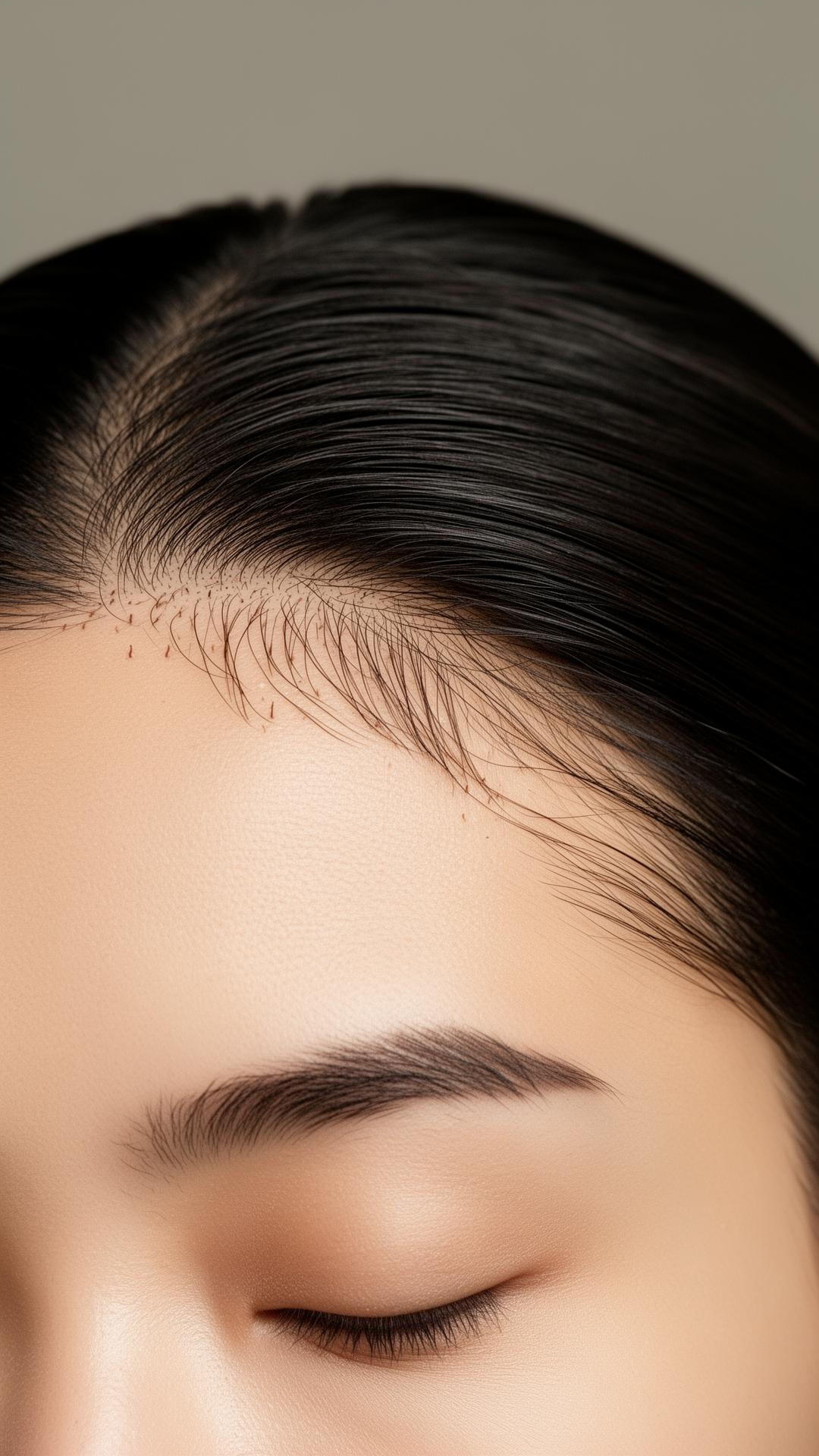
Crown visibility behaves unlike the hairline.
- 01Visibility comes from above
The hairline is read at eye level. The crown is read from above — by taller colleagues, by overhead light, by cameras. The viewing geometry is different, and so is what the eye notices first.
- 02Lighting changes the impression hourly
Crown show-through is highly dependent on direction and intensity of light. The same area can read full in one room and exposed in the next — which is why patients rarely have a stable sense of how it looks.
- 03Blending matters more than density
A frontal hairline is judged on shape and edge. The crown is judged on how seamlessly it transitions into the hair around it. Density without blending reads as a patch; blending without density reads as honest restoration.
- 04Direction is built around a swirl
There is no single direction at the crown. Hair fans outward from a centre point in a spiral — and that spiral, not coverage, is what makes the area look like the patient's own.
Density that follows the swirl, not the bald spot.
iGraft Long Hair FUE addresses the crown as directional architecture rather than a clearing to be filled in. Each graft is placed in alignment with the natural swirl, blended into the existing hair, and graded carefully across the area so the result reads as continuous from above.
- 01
Swirl mapped before any graft is placed
The natural spiral is studied first — its centre, its direction, the way surrounding hair fans away from it. Implantation flow is then planned to extend that pattern, not interrupt it.
- 02
Single-follicle blending at the periphery
The transition into surrounding hair is built with single follicles, so density softens outward rather than ending in a visible edge. This is where blending succeeds or fails.
- 03
Transition density, not maximum density
Coverage is graded — heavier toward the centre of the thinning area, softer at the boundary — so the eye reads continuity rather than a denser inset.
- 04
Selective extraction within preserved hair
Grafts are taken individually from between full-length donor hairs. The donor area is never shaved or visibly disturbed during recovery.
- 05
Donor capacity protected for the long view
Crown work is graft-intensive, and the crown is rarely the last conversation. Extraction is paced against future need so frontal and crown work both remain possible across years.
- 06
Doctor-led directional placement
Crown direction is too unforgiving to delegate. Design and graft angle are performed personally by Datuk Dr. Inder.
A return to routine the room will not notice.
Because no shaving is performed, healing happens beneath the surrounding hair you already have. For most crown patients, this is the difference between a procedure that announces itself and one that quietly does not.
- 01
Day 0
The procedure ends within preserved hair. The patient leaves looking essentially as he arrived — no shaved patch above, no visible donor strip behind.
- 02
Days 3–7
Routine resumes. Surrounding hair continues to conceal the working area through the early healing window.
- 03
Months 3–6
Initial shedding settles. Early growth emerges quietly within the swirl, in the direction of the surrounding hair.
- 04
Month 12
The crown reads as continuous with native hair — judged not by maximum density, but by how well it blends from above.
Crown thinning rarely stops on its own timeline.
The crown almost always continues to behave as it would naturally. A considered plan accounts for this — not by promising to outpace it, but by building a result that ages alongside the surrounding hair rather than separating from it.
- 01
Results judged by blending, not coverage
The intent is a crown that reads as the patient's own from above — not a denser inset surrounded by thinner hair.
- 02
Realistic density, deliberately chosen
Aggressive density at the crown can read as artificial within five years if surrounding hair softens further. Restraint is, here, a long-term decision.
- 03
Donor capacity reserved for what may come
Crown thinning may continue. The plan keeps grafts in reserve for future blending, rather than spending the donor area on a single visible push.
- 04
A coherent picture across years
Crown work is judged best at year three and year five — when the result either still belongs to the head it sits on, or visibly does not.
Crown studies, shared in private.
Outcomes are documented quietly and reviewed in considered context. Top-down crown studies are shared personally during consultation rather than published.
Patient studies shared privately during consultation
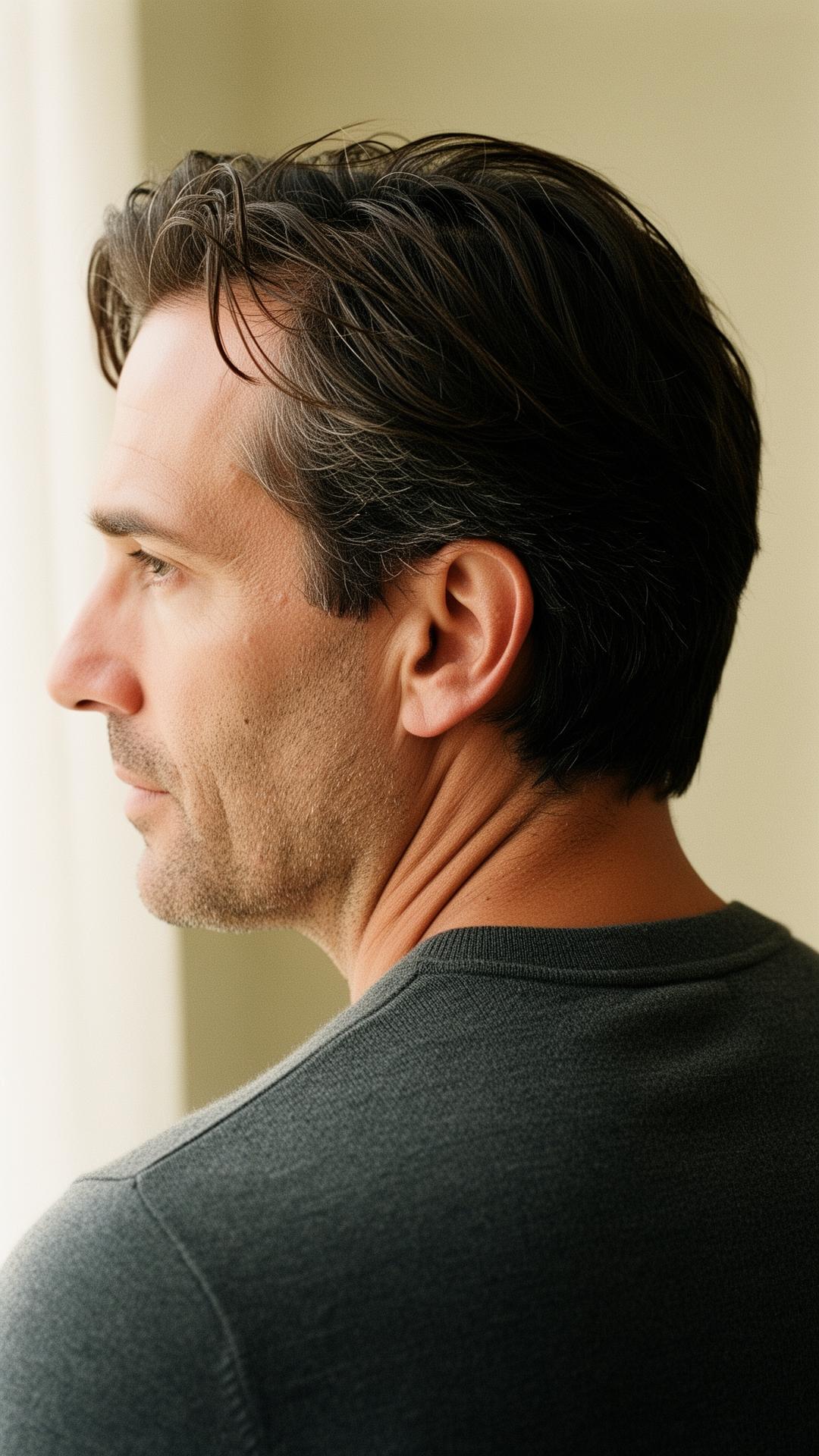
Crown questions, answered honestly.
Continue exploring crown and male restoration.
- 01Long Hair FUE for MenThe broader male perspective — frontal recession, crown thinning, donor planning, and the considerations behind each.
- 02M-Shaped Hairline RestorationHow the temples and frontal contour are rebuilt with believable masculine proportion — the front-of-head counterpart to crown work.
- 03Receding Hairline TreatmentFrontal recession considered alongside crown change, and how the two areas are planned together over time.
- 04ResultsQuiet documentation from the iGraft archive — observed across the patient's natural growth journey rather than presented as before-and-after marketing.
- 05Private ConsultationHow a first, confidential assessment is arranged with Datuk Dr. Inder — and what a considered crown plan looks like in person.
A considered plan for the crown.
A private assessment with Datuk Dr. Inder — to consider whether Long Hair FUE is suitable for restoring crown blending, directional harmony, and a natural read from the angles you cannot see yourself.
ABHRS Diplomate · ISHRS Fellow · 30+ Years Experience