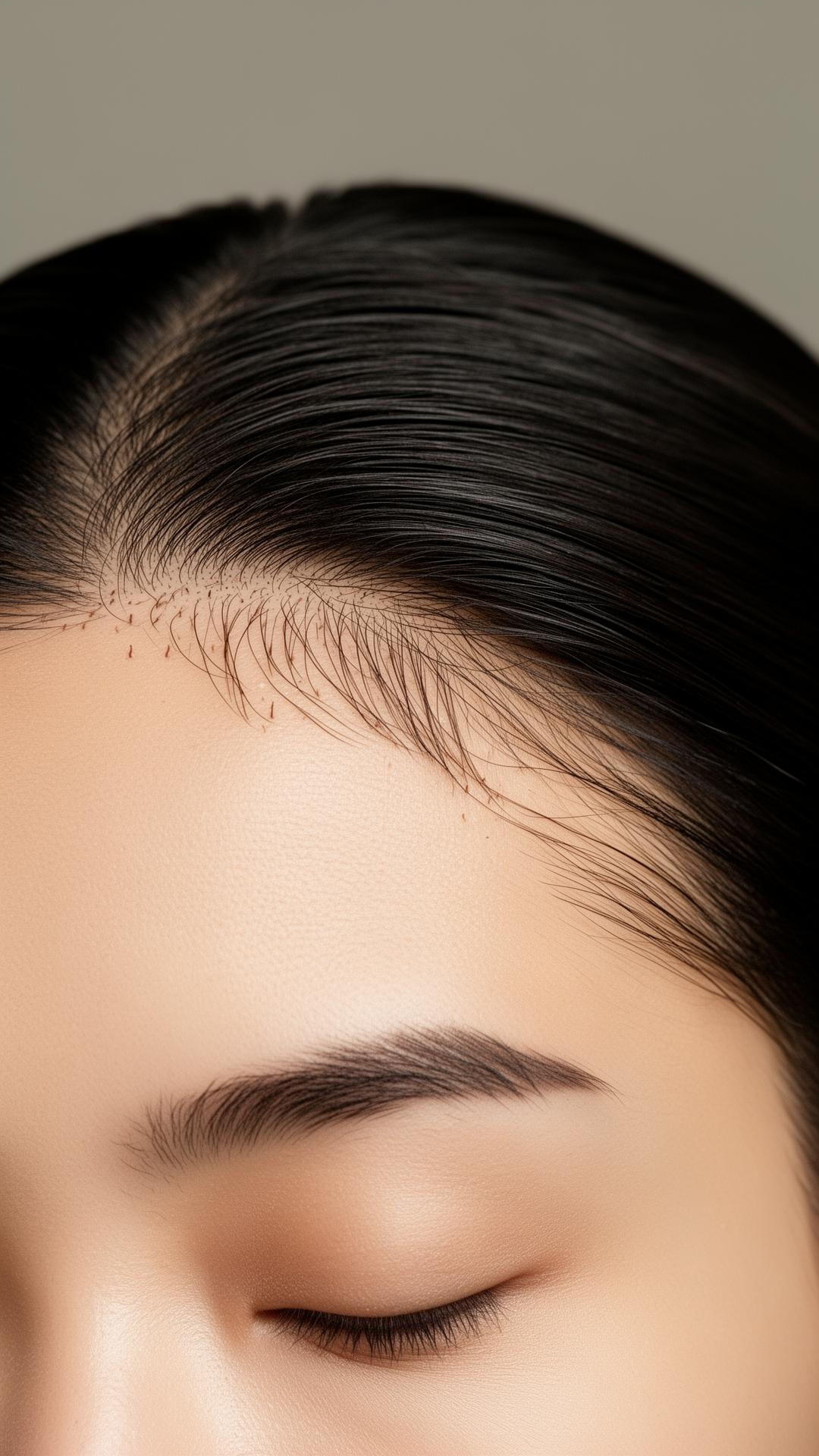
The temples, rebuilt into a believable contour.
An M-shaped hairline restored as a piece of facial architecture — proportionate to the brow, soft at the temples, age-appropriate at the leading edge. A no-shave procedure for men who want the result to read as their own face, refined.

Two angles open up, the face changes.
Temple recession is rarely the first thing the patient notices — but it is often the first thing the room does. As the M deepens, the contour of the face begins to read differently in profile, in photographs, and under direct light.
- 01
Recession at the temples
The angles draw back gradually. The masculine contour of the upper face begins to look longer, older, less defined.
- 02
An exposed forehead
The forehead reveals more height than the patient remembers. Side profile and photographs become the first to disclose it.
- 03
An isolated central tuft
The remaining frontal tuft begins to read as a separate island rather than a continuous contour, accentuating the recession.
- 04
Anxiety about over-correction
Many men hesitate because they fear an unnaturally low, geometrically obvious, or age-inappropriate result.
Why this hairline is harder to design.
- 01It is a contour, not a line
The M-shape involves two distinct lateral recessions, a central tuft, and the soft transitions between them — each requiring its own attention in three dimensions.
- 02Symmetry is not the goal
Believable masculine hairlines are subtly asymmetric. Forcing perfect symmetry produces a result that reads as designed rather than grown.
- 03Density is misunderstood
Too dense and the frontal edge reads as artificial. Too sparse and it appears unfinished. The refined number lies between, and varies from face to face.
- 04Position is age-dependent
A frontal edge that suits a man in his thirties may look out of place a decade later. The plan must be age-appropriate today and credible across the years to come.
An architectural approach, calmly executed.
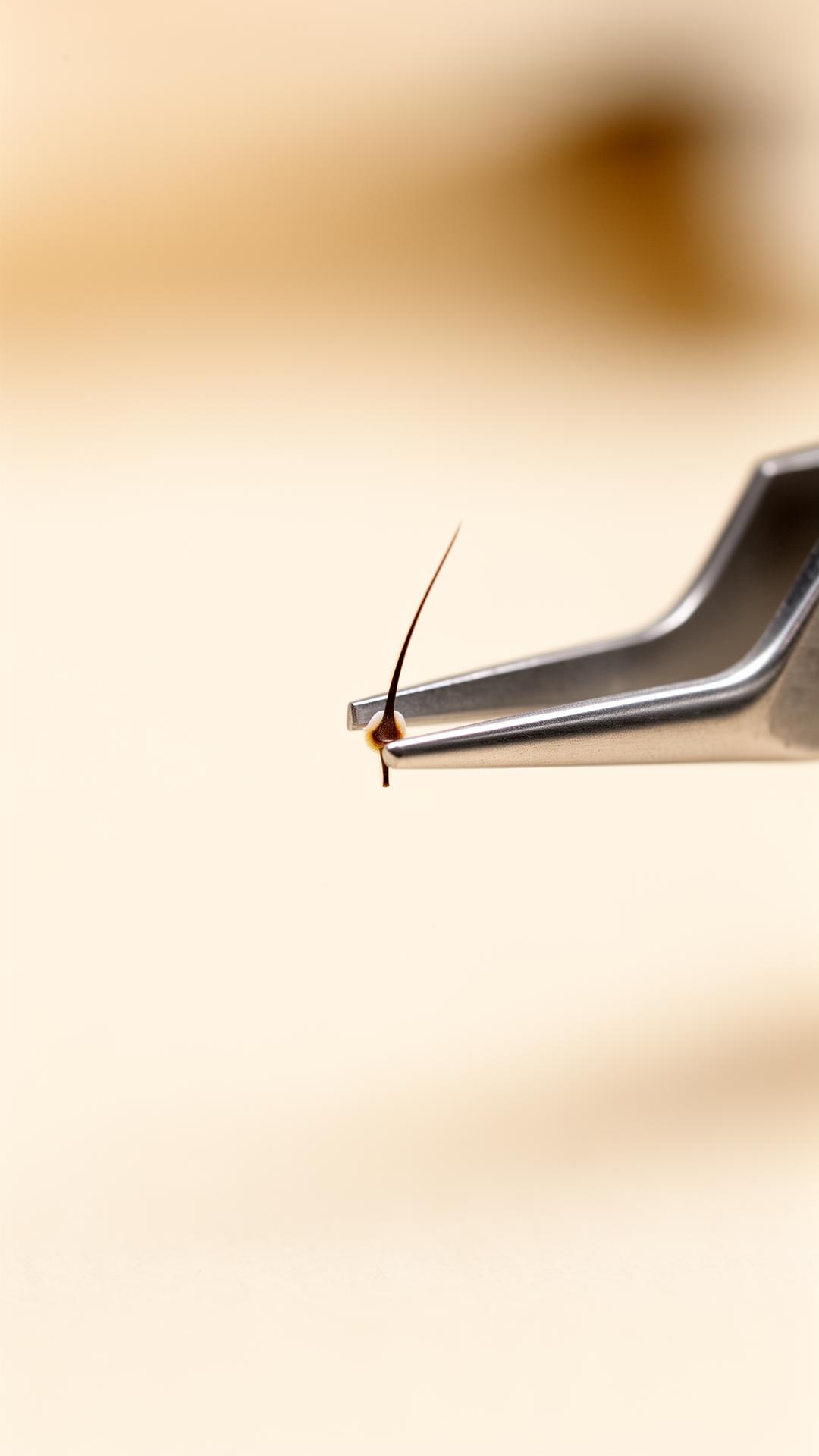
The iGraft method addresses M-shape recession as a single architecture — temple corners, tuft, and the soft transitions between them designed together, then executed graft by graft within preserved hair.
- 01
Frontal mapping
The contour is mapped in person, with attention to brow position, facial proportion, side profile, and the patient's existing pattern.
- 02
Soft temple restoration
The lateral angles are rebuilt with a gradual edge rather than hard corners — the way a believable masculine temple is drawn.
- 03
Tuft continuity
The central tuft is brought into continuity with the rebuilt temples, so the new frontal contour reads as one considered design.
- 04
Single-hair leading edge
The leading edge is built with single-follicle grafts to preserve the soft, undefined quality the eye expects of a credible hairline.
- 05
Considered density gradient
Density rises gradually behind the leading edge — a gradient rather than a wall, allowing light to pass as it does through native hair.
A recovery that stays under your hair.
Because the procedure is performed without shaving, healing happens within the patient's preserved length. The change is private until the patient chooses to acknowledge it.
- 01
Day 0
The procedure ends within preserved hair. Most patients can travel home the same day.
- 02
Days 5–7
Routine professional and social activity resumes. Concealment is rarely required.
- 03
Months 3–6
Initial growth begins to establish behind the new frontal contour.
- 04
Month 12
The full character of the restored hairline emerges — proportionate, age-appropriate, and quietly his own.
Avoiding artificial hairline design.
The aim is not the lowest, straightest, or densest line a procedure can produce. The aim is a hairline that is believable today and remains credible decades from now — calibrated to the face it belongs to, not to a trend.
- 01
Believable masculine contour
The leading edge is shaped to the face — softly irregular, gently receded at the temples, never drawn as a flat geometric border.
- 02
Age-appropriate position
Height is set to suit the patient's stage of life and likely future. A hairline that is too low at thirty rarely reads well at fifty.
- 03
Proportionate transition
Density rises in stages rather than at the edge. Light continues to pass through the leading hairs the way it does in unaltered hair.
- 04
Harmonious with facial structure
Temple position, brow distance, and side profile are weighed together, so the result sits in agreement with the rest of the face.
- 05
Long-term realism
The plan accounts for how surrounding hair is likely to behave, so the contour remains coherent across years rather than reading well only on day one.
A frontal contour the face accepts.
Outcomes are reviewed in private and discussed only in the context of the patient's own face and goals. The aim is a result that belongs to the patient — never one that introduces itself.
Patient studies shared privately during consultation
Considered questions.
A frontal contour, drawn in person.
A doctor-led assessment with Datuk Dr. Inder — to weigh your temples, your brow, your side profile, and the right architecture for all three.
ABHRS Diplomate · ISHRS Fellow · 30+ Years Experience